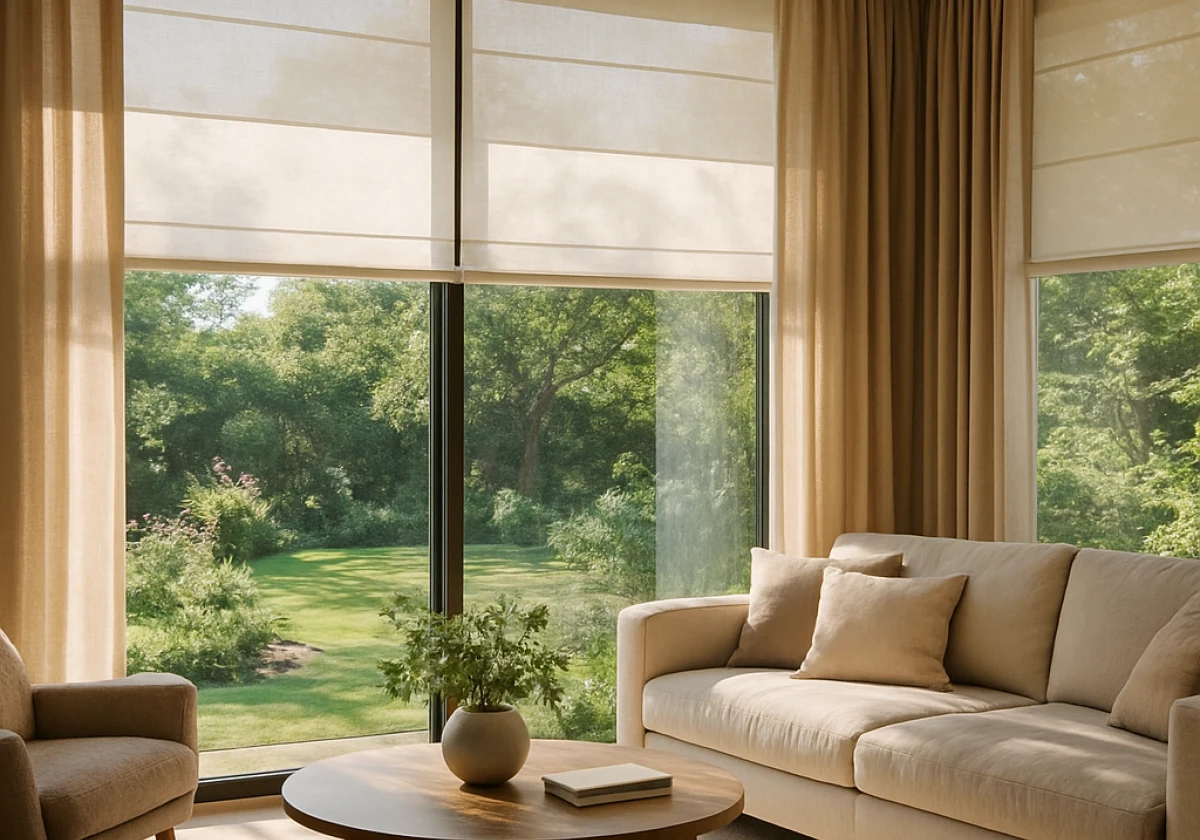
Choose window coverings by matching each room’s light exposure to how you use the space. A north-facing kitchen and a west-facing lounge need very different answers, even inside the same house.
Most people pick blinds on colour alone, then wonder why glare still washes out the telly at four in the afternoon. Light hits every room differently. Your choice has to follow the sun, not the showroom catalogue.
This guide covers sunlight mapping, the curtains and blinds that suit each room, and where shutters and awnings earn their place.
How Does Natural Light Change the Window Coverings You Choose?

Sunny rooms need blackout layers, and dim rooms suit sheer fabrics. Orientation, season, and the hours you spend in each room all pull your decision in different directions.
Work through these three steps, and you’ll land on the right answer for every room without second-guessing.
Start by Mapping How Sunlight Moves Through Your Home
Spend a weekend noting which windows catch the sun at 9 am, at noon, and again at 5 pm. That simple record will show you where heat builds through the afternoon and where the light stays soft all day.
In most Australian homes, north-facing windows receive sunlight for longer during winter, when the sun sits lower in the sky. During summer, roof eaves can help shade those same windows. Meanwhile, west-facing windows catch strong afternoon sun (the worst offender in most Aussie homes). South-facing rooms stay dim, so heavy coverings there will make a living space feel like a cave by mid-morning.
A good room design starts with understanding how sunlight enters each room, rather than with a colour swatch.
Which Rooms Need Blockout Curtains or Roller Blinds?
Bedrooms, media rooms and any west-facing lounge need blockout curtains or blockout roller blinds. In those rooms, unwanted morning light can disturb sleep, while afternoon glare can make television screens difficult to see.
In practice, bedrooms are where we see the most regret. Even a thin strip of morning light at the edge of a blind wakes a light sleeper. That’s the detail many people miss until they’ve lived with it for a fortnight.
Of course, appearance also plays a part. Roller blinds suit rooms where you want a clean look since their simple design sits neatly against the window without bulky fabric or folds.
You can also use double roller blinds for more control over sunlight. Double roller blinds give you two layers on a single bracket. The sunscreen layer handles daytime glare while the blockout layer keeps light out at night. Motorised controls make switching between the two easier on tall or hard-to-reach windows.
Matching Window Furnishings to Each Room’s Job
Beyond light, think about what the room does. A home office needs glare control on a screen, while a bathroom needs privacy first. The job of a room predicts the right window covering better than its orientation. We’ve confirmed that across thousands of installs
In kitchens, easy cleaning becomes another priority since grease, dust, and cooking splashes can build up on window coverings. That’s why you should choose aluminium venetian blinds or PVC plantation shutters. They are easier to clean and more resistant to moisture and cooking splashes than fabric blinds.
Living areas usually need both natural light and privacy. So layered window coverings give you daytime light control and evening privacy from one set of windows.
Blinds for Sunlight Control: Roller, Venetian and Vertical Window Blinds
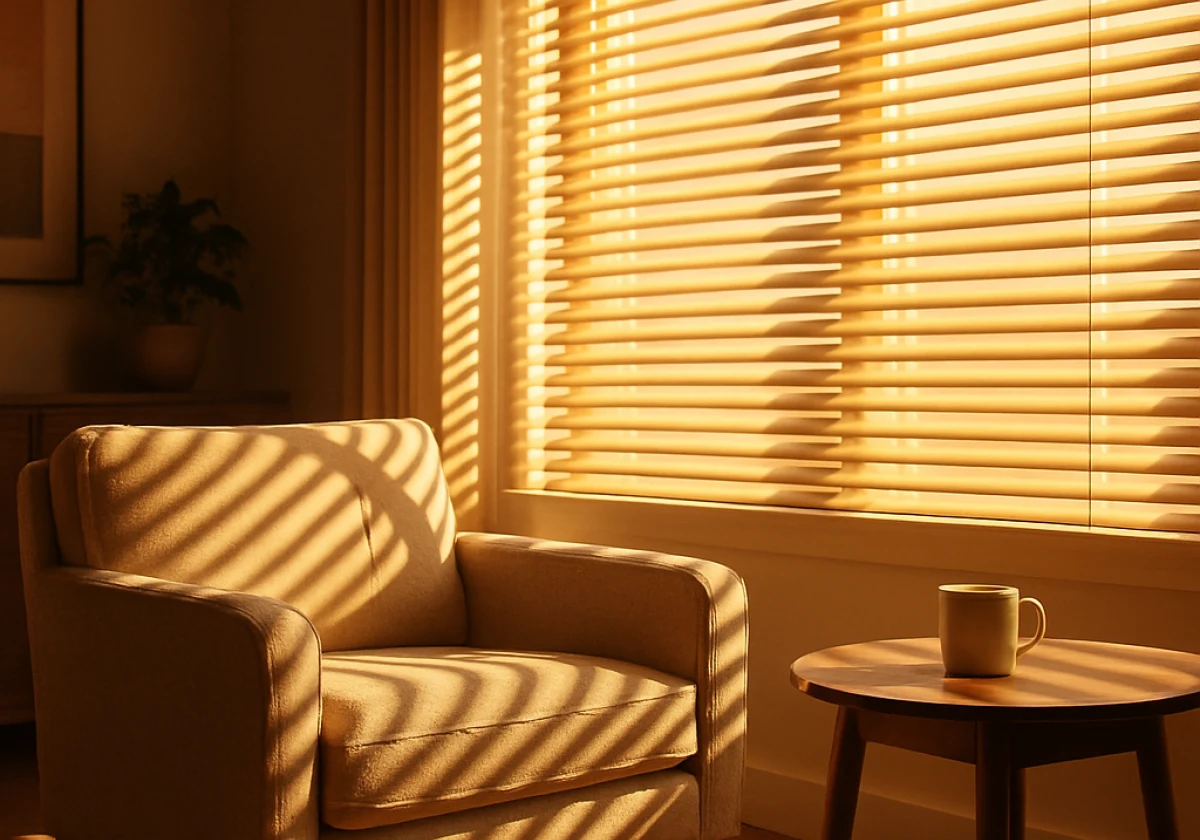
Once you’ve mapped the light, the product choice gets specific. Most Australian lounge rooms cop harsh western sun, and the wrong blinds make them unbearable by mid-afternoon.
Compare these three types of window coverings side by side before you commit to a whole house.
| Blind type | Light control | Privacy | Best room fit | Glare handling |
|---|---|---|---|---|
| Roller blinds | Open or closed, in sunscreen or blockout fabric | Full when down, none when up | Bedrooms, living areas, home offices | Sunscreen fabric cuts glare and keeps the outlook |
| Venetian blinds | Tilt the slats to any level | Adjustable without losing daylight | Kitchens, bathrooms, studies | Angle slats up to bounce light off the ceiling |
| Vertical blinds | Rotate the vanes left or right | Good, turn them away from the street | Sliding doors and wide windows | Vanes turn edge on to low afternoon sun |
For a bright west-facing window, pair sunscreen roller blinds with a blockout layer. If you have wide sliding doors, vertical blinds will offer flexible light control, as you can tilt the slats to adjust sunlight and privacy. Meanwhile, panel glide blinds provide a cleaner look with fewer, broader panels that slide across the glass.
We’ll be honest, the blind that looks best in a showroom often fails the 4 pm test at home. That’s why we recommend motorised roller blinds for easier light control and outdoor blinds to reduce afternoon heat on west-facing windows (our most requested fix every summer).
And how you place the blinds affects how well they control heat and light. External blinds stop heat before it ever reaches the glass. Internal blinds then fine-tune the light once it is inside.
Pairing Curtains and Blinds With Softer Light in Bedrooms and Living Areas
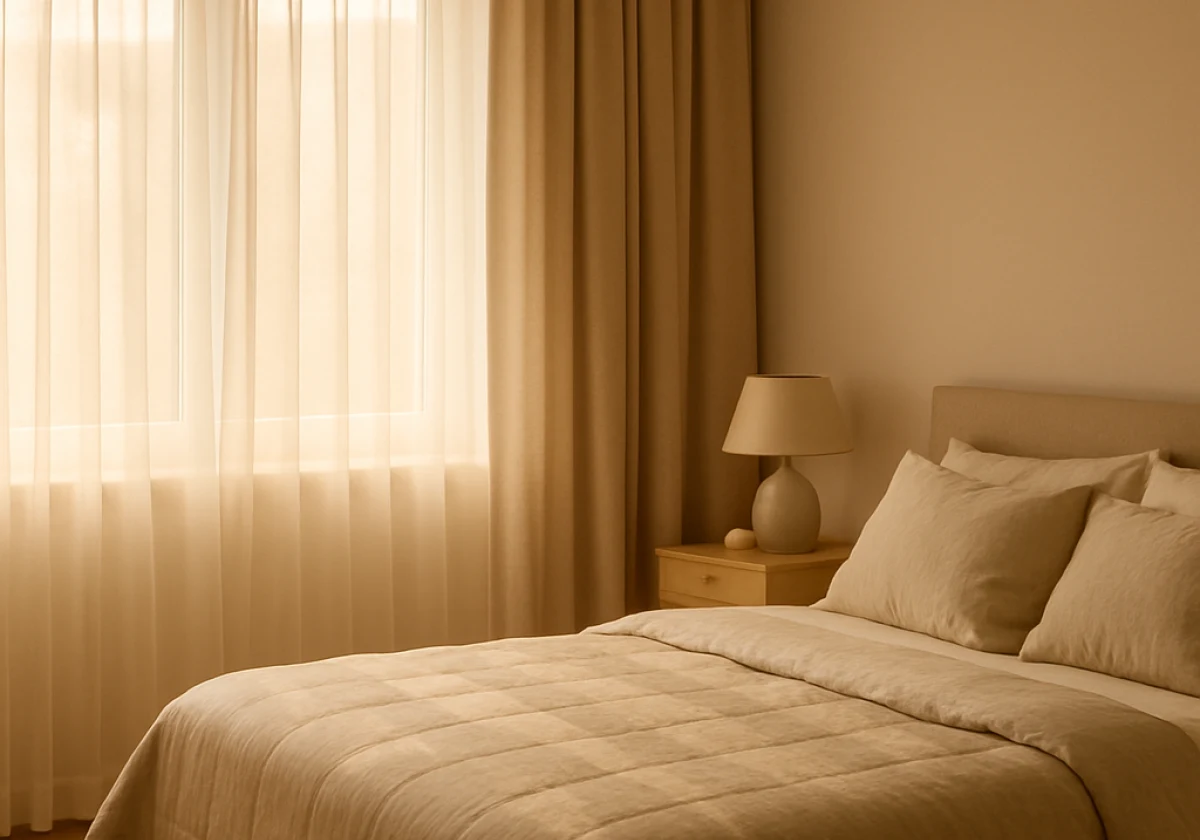
The best part about layering curtains is adjusting privacy and light without touching a single switch. The fabric also softens noise in a room full of tiles.
Four window covering options cover almost every bedroom and living area we fit out.
- Sheer Curtains: Sheer curtains let natural light into the room while making it harder for people outside to see in during the day. They work well in south-facing rooms that receive less direct sunlight.
- Blockout Curtains: Shift workers and early risers get the most benefit from them. Their lined fabric can extend beyond the window edges, which reduces the light gaps that blinds often leave at the sides.
- Roman Blinds: Neat and tailored, Roman blinds fold up in soft pleats. They suit smaller windows where full-length curtains would swamp the wall.
- Layered Combinations: Pair sheers with heavier drapes on a double track. This way, you can take a room from bright to blacked out in about five seconds.
Among blinds, Roman blinds are the softest thing you can hang in a bedroom without going to full drapes.
Our Tip: Measure the wall around your window before ordering curtains. Extend the curtain rod about 15 to 20 cm beyond each side of the window so the fabric can cover the edges and reduce light gaps. For Roman blinds, check whether you’ll fit them inside or outside the window frame, since each option needs different measurements.
Window Shutters Give You Light and Privacy Without Losing the View
Blinds and shutters do different jobs, and shutters cover the rooms where privacy and airflow both count.
Plantation shutters sit inside the window frame with wide louvres you tilt by hand. That gives living areas and bathrooms a privacy level you can change in a second.
Timber shutters suit a bedroom because their natural wood finish creates a warm, cosy feel. Meanwhile, PVC shutters handle bathroom steam without warping. If your west-facing rooms receive strong afternoon sun, aluminium shutters and outdoor blinds can help reduce heat entering through the windows.
Roller shutters offer another option, as they block most incoming light when fully closed and provide an extra physical barrier at night.
For outdoor spaces, awnings and folding arm awnings provide shade without making patios feel enclosed. You can retract them during winter to let more sunlight reach the space. Their benefits can extend indoors too, as suitable blinds and awnings help reduce heat entering nearby rooms. We’ve seen blinds and awnings pull several degrees out of a lounge on a 38-degree day (the difference shows up on the power bill).
Tilting the louvres is where plantation shutters beat any fixed panel. If you want to reduce glare while keeping your garden in view, angle the louvres upwards. Close them flat for privacy from the footpath, then open them wide for a breeze through a bedroom on a warm night.
Among shutters, custom-made plantation shutters beat anything off the shelf on odd-shaped windows. Arches, angled gables and narrow bathroom openings rarely match standard sizes, so ready-made shutters may not provide enough coverage. Custom shutters, along with professional installation, help prevent light leaks and improve privacy. After all, even a 2 cm gap down one side can leave part of your room exposed to outside views.
Book a Free Measure and Quote for Your Windows
Light exposure and the job of each room decide your window coverings. Once you match those two, the rest will depend on colour and budget. Every window in the house deserves its own answer, not one product repeated from the front door to the back.
Choosing window coverings gets easier once you walk the rooms first. Note where the glare lands today, then bring that list to a consultation. Choosing the right window covering for each space takes one afternoon of watching the light, and a free quote costs you nothing. It also saves you from paying twice for the wrong window treatment.
Fleeting Youth Records supplies blinds, curtains, awnings and shutters for homes across Melbourne, Sydney and Brisbane. Contact us to book your free measure and quote, and get window treatments that suit every room in the house.