
Window coverings improve energy efficiency by trapping still air near the glass, which reduces heat loss in winter and heat gain in summer. That pocket of air acts as an extra layer of insulation.
A lot of indoor heat escapes through the glass during Melbourne’s colder months, while summer sunlight brings unwanted warmth inside. At Fleeting Youth Records, we hear this same complaint every year. We’ll explain how to resolve that issue in this guide.
It’ll cover how energy-efficient blinds, curtains, and awnings help reduce heating and cooling costs. You’ll also learn which option suits each room and what to consider when choosing window coverings. Let’s jump right in.
Energy-Efficient Window Coverings Work as a Second Layer of Home Insulation

According to the Australian Government’s Your Home guide, up to 40% of a home’s heating energy can escape through uncovered windows. That makes your window coverings a working part of the home rather than a finishing touch on the window.
Two separate questions explain the whole thing, so let’s take them one at a time.
How Heat Transfer Works Through Uncovered Windows
Heat moves through bare glass in three ways: conduction, radiation, and convection. During winter, warmth conducts straight out through the pane. But in summer, the sun radiates in and warms your floors and furniture.
Air makes the problem worse. When warm indoor air touches the cold glass, it cools and sinks towards the floor. Warmer air then moves in to replace it, and creates a cycle of air movement (that cold draught we feel near the couch).
So the heat transfer never really stops, which is why your heating and cooling systems keep working to maintain a comfortable temperature. We’ve measured bare west-facing glass in January sitting well above the room temperature around it. The afternoon sun would hit these windows directly and heat the glass.
What Makes a Window Covering Energy Efficient
A window covering becomes energy efficient when it holds a still layer of air between its fabric and the glass. Still air carries heat poorly, so that barrier reduces heat loss in winter. In summer, suitable fabrics also help limit solar heat gain.
Fit decides how much of that benefit you keep. Gaps at the sides or the top let air slip straight past the barrier. In this situation, fabric density, a pelmet above the window and a close fit inside the window recess all lift thermal performance.
From years of installs, we can tell you that two identical blinds hung differently deliver very different energy savings. Those small details improve energy efficiency more than the fabric name on the label.
Thermal Blinds That Cut Energy Use: Honeycomb and Roller Blinds Compared
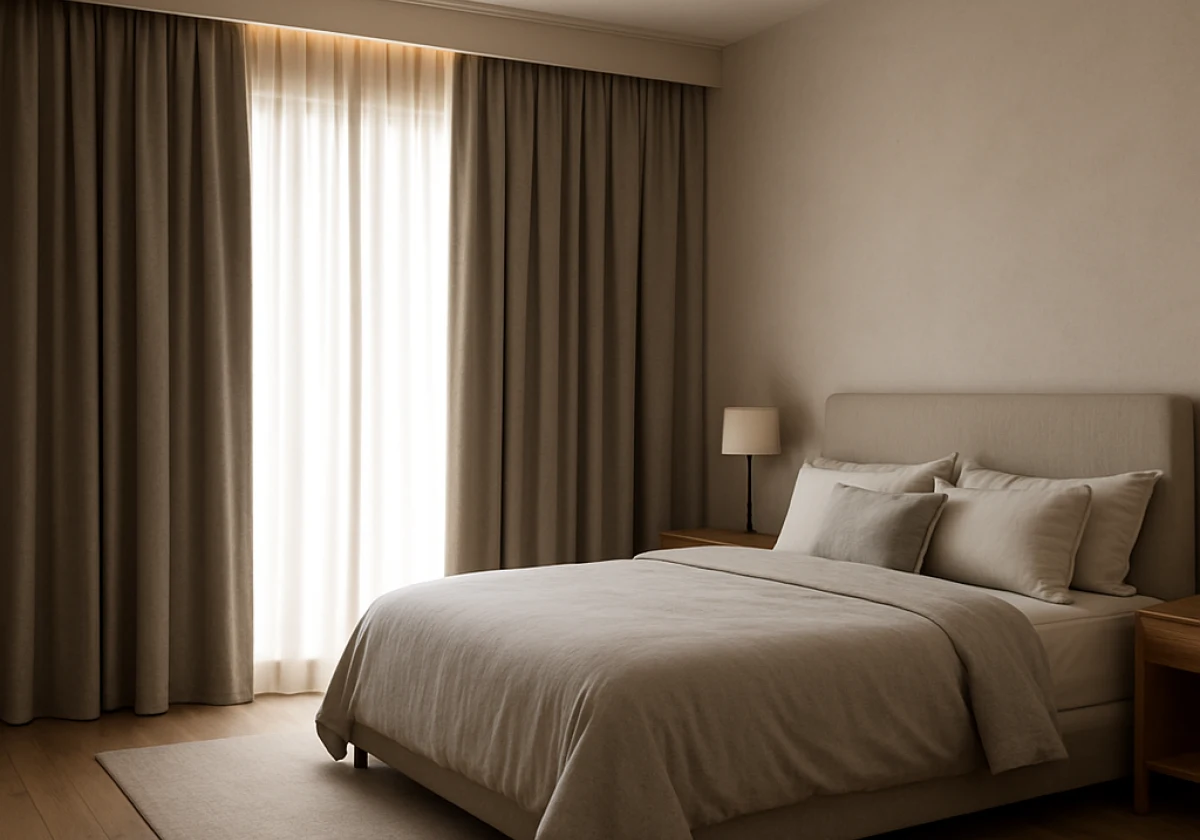
Choosing the right window blind style can reduce energy bills every season without changing how your windows look.
The table below compares how each style saves energy and where it works best.
| Blind style | How it saves energy | Best suited to |
|---|---|---|
| Honeycomb Blinds | Hollow cells trap air and slow heat transfer | Bedrooms that feel cold overnight |
| Roller Blinds | Blockout fabric reduces sunlight and heat entering the room | West-facing living rooms |
| Dual Roller Blinds | Sunscreen fabric filters sunlight by day, while blockout fabric provides extra coverage at night | Rooms needing natural light and privacy |
| Vertical Blinds | Adjustable slats control direct sunlight, though gaps allow heat to pass through | Large sliding glass doors |
| Panel Blinds | Wide fabric panels cover large glass areas and reduce direct sunlight | Wide windows and patio doors |
The time of day you use your blinds also affects energy savings. On winter mornings, open them when sunlight reaches the glass to let natural warmth inside. Then close them after sunset to help retain that warmth overnight. And during summer, close blinds on sun-facing windows before the afternoon heat builds up.
Quick Tip: Choose honeycomb blinds where winter heat loss is the main problem, and roller blinds where summer glare and sunlight are the bigger concerns. Both help manage heat transfer through windows and reduce the work your heating and cooling systems need to do.
Do Curtains and Plantation Shutters Make Your Home More Energy Efficient?
Yes, curtains and shutters make your home more energy efficient by adding an insulating barrier across the window. The energy you save depends on fabric weight, lining, and how closely the covering sits to the frame.
Compare these four options against the rooms you’re trying to keep comfortable.
Blockout Curtains: Heavy, lined fabric running from ceiling to floor traps a layer of air against the window, especially with a pelmet closing the gap above. This reduces heat loss on cold nights.
Sheer Curtains: These filter daylight instead of blocking it, so they soften harsh light and cut glare. On their own, they provide little insulation against winter cold.
Plantation Shutters: Timber or PVC louvres fit inside the window recess and reduce airflow when closed. You can also angle the louvres to control sunlight and privacy without opening the whole shutter.
Roman Blinds and Venetian Blinds: Thick Roman blind fabric holds warmth near the glass, while aluminium Venetian blinds reflect some sunlight away from floors and furniture when angled correctly.
You can also layer sheer curtains behind a blackout pair so one window handles daytime light and night-time warmth. This combination gives you privacy during the day without keeping the room dark.
Adding Awnings and Outdoor Blinds to Reduce Solar Heat Gain in Summer
Now that your energy-efficient window treatments are sorted indoors, let’s look at stopping heat before it reaches the glass. External shading works earlier in the chain, so the sun never gets a chance to warm the room behind it.
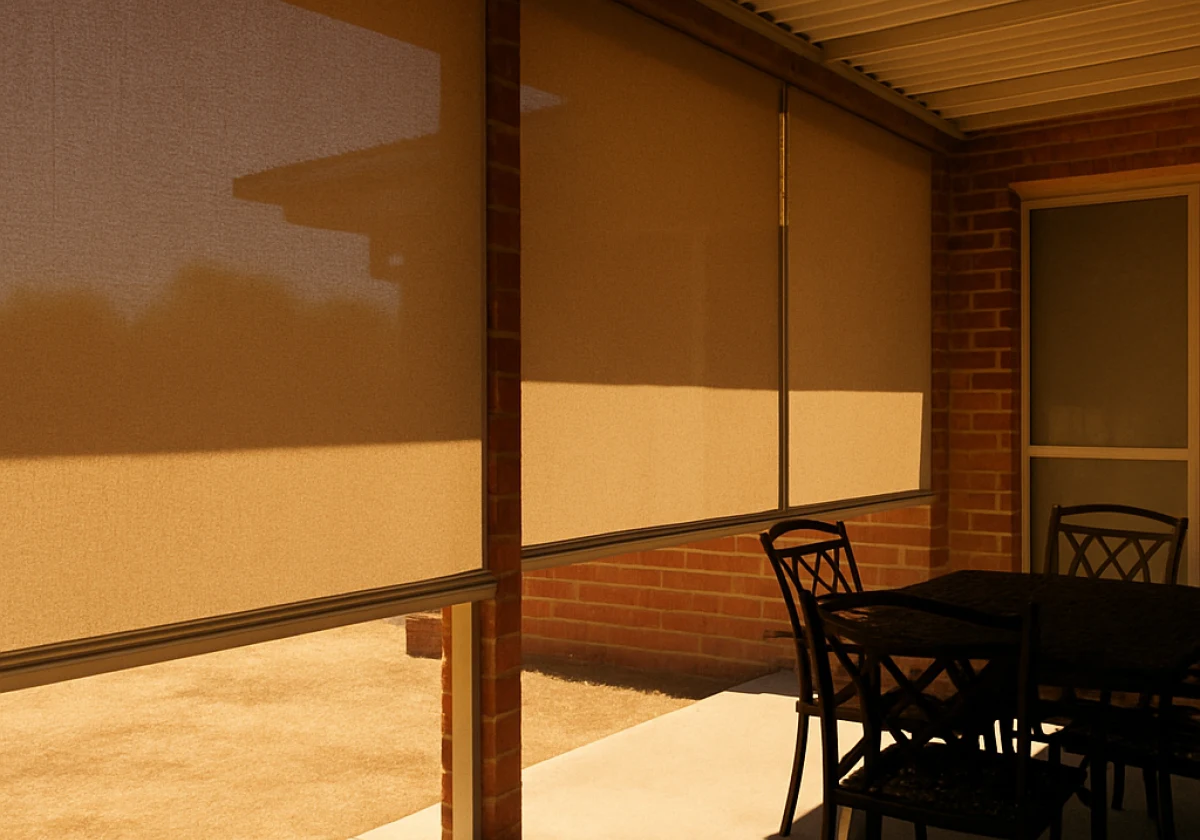
For example, folding arm awnings cover an alfresco area or a wide rear window. You can also retract them during cooler months to allow more sunlight into the home. By comparison, straight drop awnings suit west-facing windows, where afternoon sun arrives at a low angle, and indoor blinds struggle to control the heat (the hardest hour of an Australian summer).
If you’ve ever walked barefoot across a sunlit tiled floor in February, you already know how much solar heat gain plain glass lets through. Outdoor blinds in PVC or mesh block that direct sunlight and shelter a verandah. That way, the space stays more comfortable on hot afternoons.
Roller shutters go one step further. Their aluminium slats reduce incoming light, outside noise, and solar heat, while a closed shutter also helps limit heat loss on winter nights. We suggest pairing any of these with an efficient indoor layer to reduce the load on your heating and cooling systems (two layers working on the same window).
Energy Saving Window Solutions: Ready to Make Your Windows Work Harder?
Your windows decide a large share of your energy costs each year. The right window furnishings make that weak point part of your home insulation instead.
Start with the rooms that bother you most. Measure the window recess carefully, then work outward from there. Small changes across two or three windows will show up on the very next bill. That’s the simplest way to save money on heating costs.
Fleeting Youth Records supplies energy-saving blinds, curtains and shutters for homes across Australia. Contact us for a free measure on energy-efficient window coverings that fit your rooms, your light, and your budget.