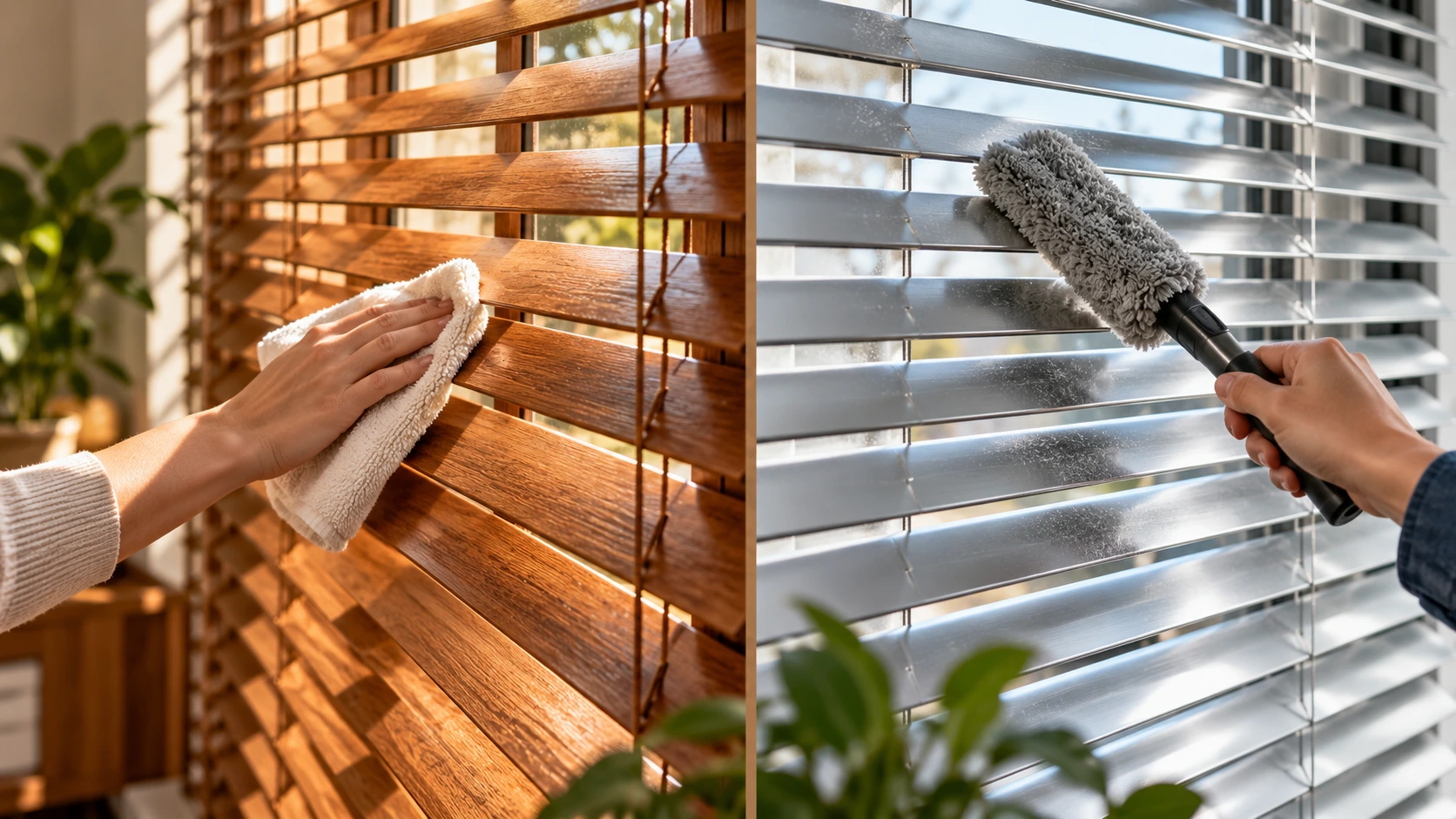
Wood and metal venetian blinds need completely different cleaning approaches. What works on metal slats can warp timber, and what suits timber often leaves metal streaky and unclean.
That’s a frustrating outcome, especially when you were just trying to keep your blinds looking good. After fitting and maintaining venetian blinds across hundreds of Australian homes, we’ve seen how quickly the wrong cloth or too much moisture ruins a perfectly good blind.
With that in mind, this guide covers how to clean venetian blinds using the right tools and the correct technique for each blind type. From there, we’ll cover how to tackle stubborn stains safely without harming the finish.
Read on, and your blinds will look better for it.
Blind Cleaning: The Supplies You’ll Need
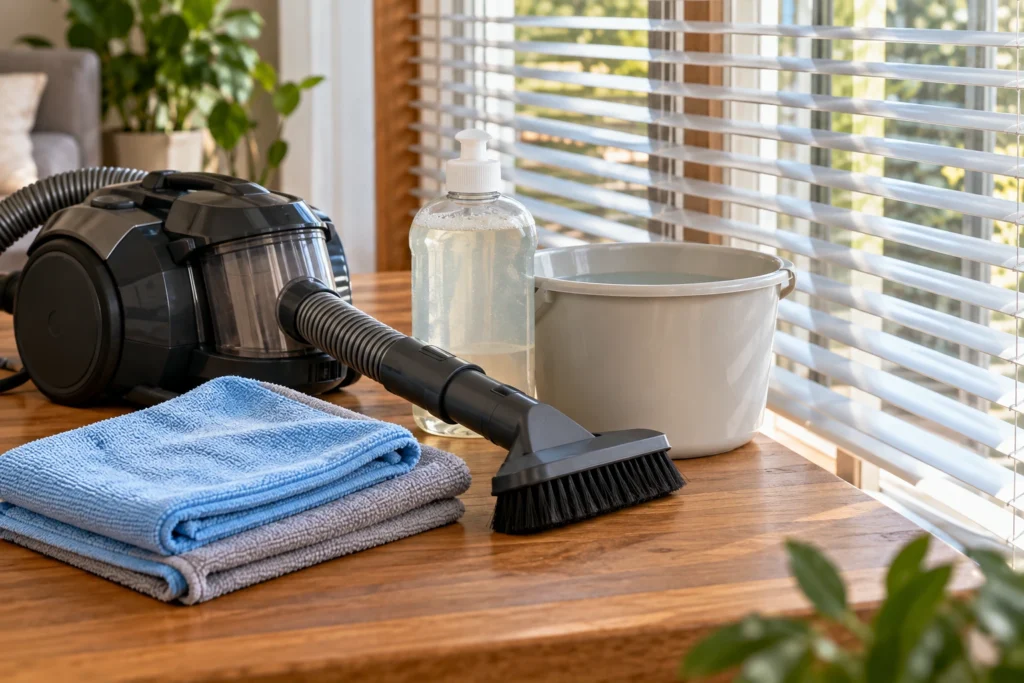
Before you touch a single slat, gather a microfibre cloth, mild detergent, and a vacuum cleaner. Each tool serves a specific purpose depending on the blind type and how dirty the slats are.
For best results, gather the following tools:
- Microfibre Cloth: A good microfibre cloth is gentle enough for wooden, aluminium, and polyvinyl chloride (PVC) venetian blind slats. It traps dust particles on contact instead of pushing them across the surface.
- Vacuum Cleaner with a Brush Attachment: A vacuum with a brush attachment is the right first step. Running it along the slats pulls loose dust off the surface and means your cloth only has grime to deal with.
- Mild Detergent: Not every blind needs detergent, but metal and PVC slats need a small amount mixed into warm water to cut through grease and light grime. For wooden blinds, use it sparingly and only when a dry cloth isn’t enough.
- Paper Towel: A paper towel won’t replace a microfibre cloth, but it’s the right tool for a fresh stain. Press it firmly onto the surface straight away, and it draws out most of the grime before it sets.
All four are affordable, easy to find, and gentle enough to use on any venetian blind material without causing damage.
How to Clean Wooden Venetian Blinds
The safest way to clean wooden venetian blinds is with a dry or barely damp cloth, because timber and water don’t mix well. They absorb moisture quickly, and warping sets in long before the damage becomes visible.
With timber, the cleaning process and the drying stage carry equal weight, and the sections below cover each one in full.
Wipe Wooden Slats the Right Way
Wipe each wooden slat with a dry microfibre cloth in one consistent direction only. Changing direction mid-wipe pushes dust into the wood grain, and over time that causes surface scratches that dull the finish.
For best results, fold the cloth into quarters so you’re always working with a clean section. That way, you aren’t dragging dust back across a slat you’ve already cleaned.
A dry cloth handles most situations, but a barely damp cloth works for light grime. The key is wringing it out thoroughly so no moisture sits on the timber.
Why Drying Wooden Blinds Properly Is Non-Negotiable
Trapped moisture between closed slats leads to mould growth and warping across the timber. According to Lung Foundation Australia, indoor mould can irritate the respiratory system and worsen existing allergies. So prolonged exposure is a genuine health concern.
As a rule, plan for 30 to 60 minutes of drying time with a window open nearby. Any less than that and moisture finds its way into the timber, where it will cause warping that no amount of cleaning will reverse.
Don’t put metal venetian blinds in the same category as timber, though. The cleaning approach is quite different.
How to Clean Metal Venetian Blinds
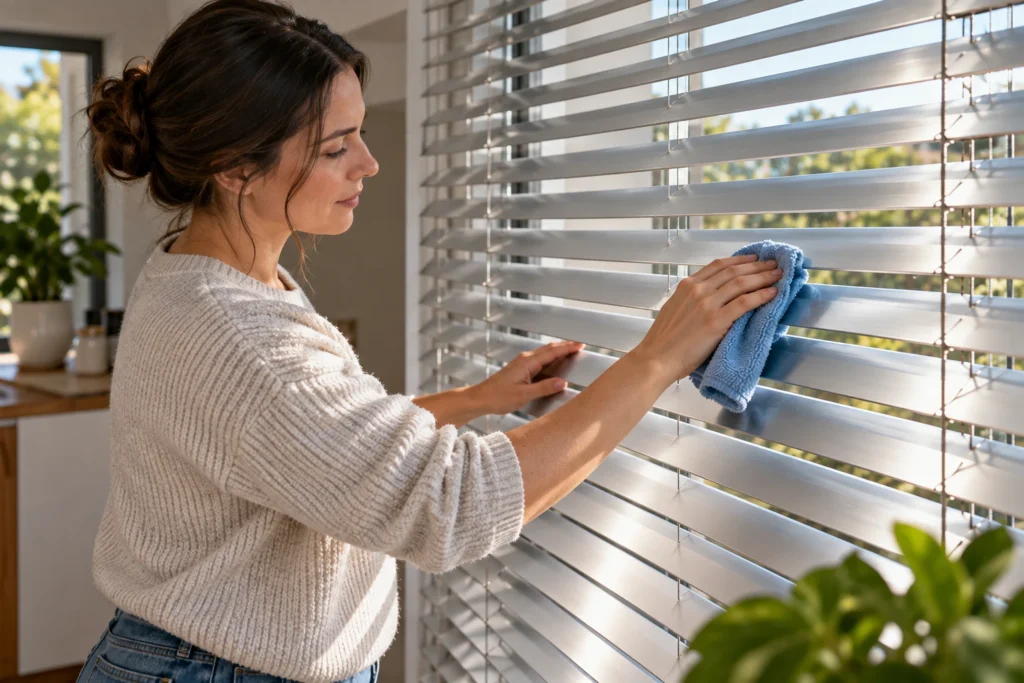
Unlike timber, metal venetian blinds handle moisture without warping or surface damage.
Start with a vacuum and brush attachment to pull loose dust off the slats, then follow with a damp microfibre cloth to remove the remaining dirt.
However, in kitchens, a dry cloth alone won’t cut through grease on metal slats. A small amount of mild detergent mixed into warm water dissolves that grease layer without leaving residue on the finish.
Then there’s hardened grime, common on blinds in workshops, laundries, and other dusty or high-humidity spaces. Soaking the blinds completely in warm water with mild detergent loosens what has bonded to the slats. For most homes, this deeper soak is only necessary two to three times a year, though kitchen blinds may need it more often.
After rinsing, the slats need to lie flat until they’re fully dry. Rehanging them too early lets water sit around the moving parts, and that’s how rust starts.
Stubborn Stains on Venetian Blinds: Try This First
Stubborn stains on venetian blind slats usually come from grease or dirt that nobody caught early enough. For fresh stains, a paper towel pressed firmly on the surface lifts most of it before it bonds to the slat. Older stains are a different situation, and they need a more targeted fix.
The lemon juice method and the right product choices cover most stain situations:
The Lemon Juice Method
For best results, mix equal parts lemon juice and water, then apply the mixture directly with a soft cloth. Two to three minutes of contact time is enough to break down grease on the slat surface. A clean, dry cloth can remove the residue after that.
We’ve recommended this lemon juice method to customers across Sydney and Brisbane who wanted a safe fix for greasy kitchen blinds. And honestly, it’s safe on both wooden and metal slats.
Harsh Chemicals and Venetian Blinds
Never use bleach, ammonia, or solvent-based cleaners on venetian blind slats. On wooden blinds, those chemicals strip the finish and leave the timber exposed to moisture damage straight away. Metal slats corrode and discolour just as quickly under the same conditions (glass cleaners often contain ammonia too).
White vinegar, baking soda paste, and diluted dish soap are all eco-friendly solutions that handle tougher stains without damaging the slat surface. Any of these, mixed with warm water and applied with a soft cloth, handles stains that lemon juice won’t shift.
Regular Cleaning: A Simple Schedule That Works

A fortnightly routine keeps most venetian blinds clean. Kitchen blinds are the exception, though, and we’ve noticed this after maintaining blinds across hundreds of Australian homes. They collect dust and grease at least twice as fast as those in bedrooms.
A simple schedule based on room type makes cleaning easy to manage:
- Kitchen and Living Areas: Steam, cooking grease, and daily foot traffic all reach the kitchen and living area slats. This combination leaves a sticky residue that builds quickly. A weekly wipe-down with a damp microfibre cloth stops that residue from hardening.
- Bedrooms and Low-Traffic Rooms: Bedroom blinds and those in low-traffic rooms only collect dust, and it accumulates slowly. A fortnightly wipe with a dry microfibre cloth clears it before it has a chance to attract moisture and bond to the surface.
- All Blind Types: Regardless of blind type, a vacuum with a brush attachment does a more thorough job than any cloth between scheduled cleans. It reaches into the gaps between slats and pulls dust out directly.
Stick to the schedule above, and your blinds will rarely need a deep clean. That saves time, protects the finish, and extends the lifespan of every blind in your home.
Cleaner Blinds Start With the Right Approach
By now you know it takes time for dust, grease, and grime to work their way into venetian blind slats. The wrong cleaning method accelerates that damage. With the correct technique for each material, both wooden and metal slats are easy to maintain.
As we’ve covered in this guide, each material just needs a slightly different approach. To break it down: a dry cloth for timber, mild detergent for metal, and lemon juice for stubborn stains. A routine handles everything in between.
At Fleeting Youth Records, the team lives and breathes window coverings. For help finding a blind that suits your space or figuring out the best way to maintain it, they’re the ones to call.
Get in touch, and they’ll point you in the right direction.