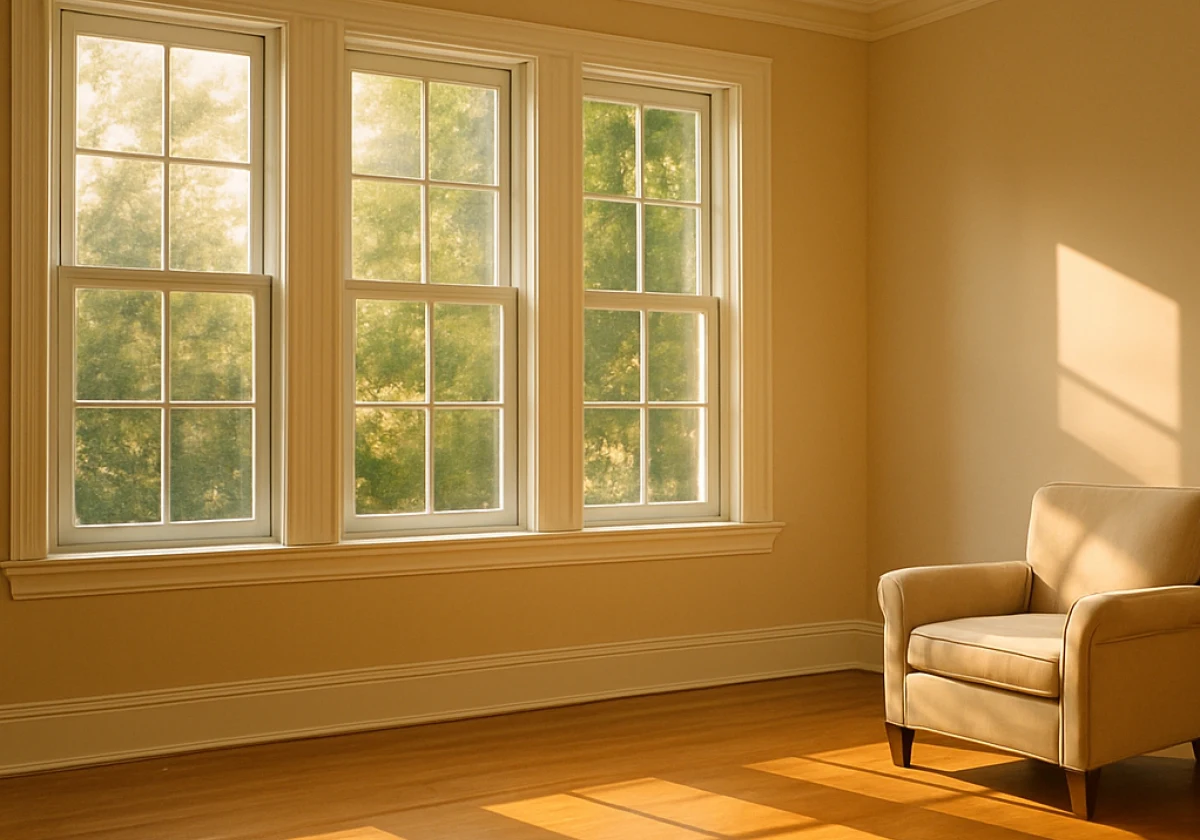
Before ordering new blinds, measure each window carefully to make sure the finished blind fits properly. Measure the width and drop in three places, then record the smallest reading. Timber frames can shift, and plaster can warp over time, so measurements may vary across the same window.
That one habit prevents costly mistakes in the process, because a custom blind cut 10 mm too wide will never drop into the recess. The factory cuts your fabric to the number you send, and no installer can stretch a short blind back out.
This guide covers the tools, the two fit types and the numbers each style needs before you order. Grab a pencil and let’s measure your window properly.
Measuring Tools and Prep: What to Sort Out Before You Measure Windows for Blinds
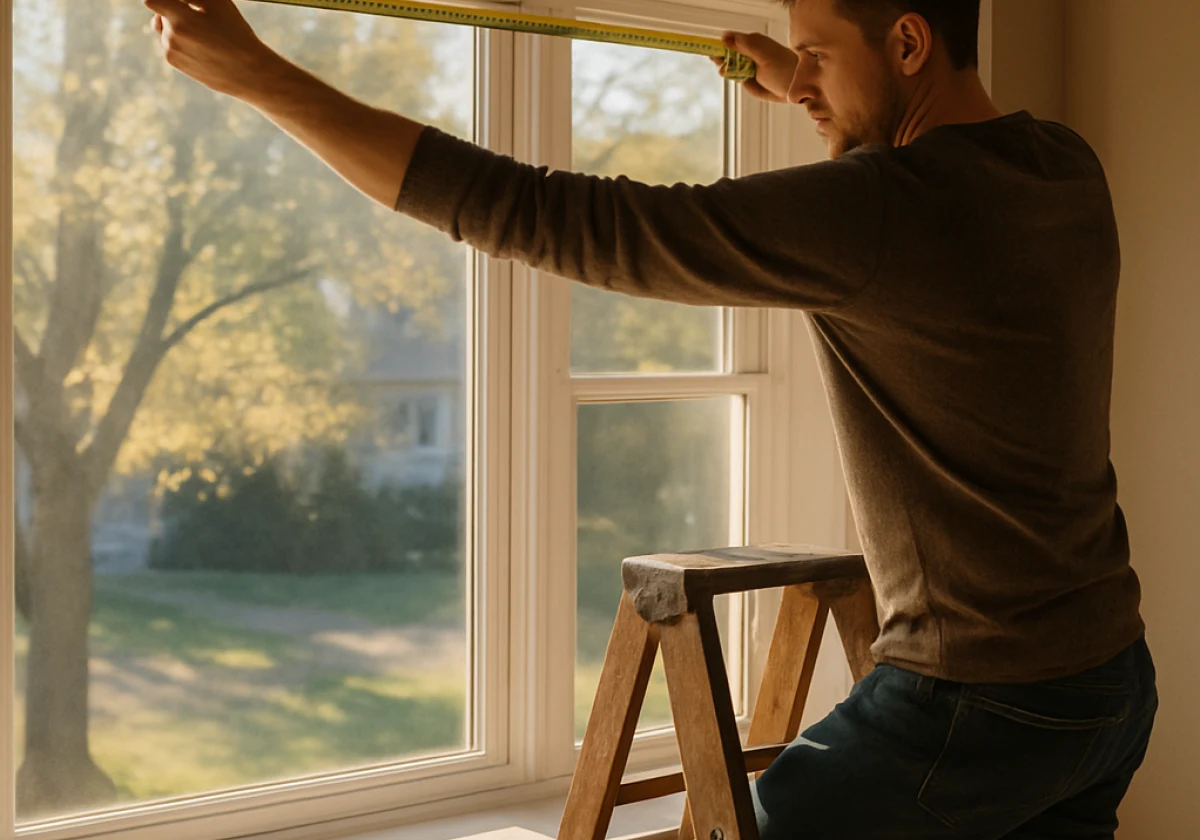
Most measuring mistakes happen before the tape even touches the frame. Five minutes of prep and the right gear will stop you guessing numbers halfway up a ladder with one hand full.
Sort out these three things first, and every figure you write down afterwards becomes something you can trust.
Why a Steel Tape Beats a Cloth One When You Measure Blinds
A steel tape measure stays straight across a wide window, while cloth or sewing tapes can sag and give you an inaccurate reading. Even a small error matters when ordering custom blinds, because a 5 mm difference can leave a gap on one side.
We recommend using a locking steel tape measure for every window. It helps you get accurate measurements and avoid costly mistakes when ordering custom blinds. You can usually buy one at a hardware shop for around $15.
Checking the Window Recess for Depth and Obstructions
Before measuring your window, check the depth of the recess to see if there’s enough room for the blind. Most roller blinds need around 60 mm of clear space to sit neatly inside the frame.
Window locks, winder handles and tiled sills can reduce that space, so check for anything that sticks out. The Australian Glass and Window Association provides industry standards for window fittings, which can help you understand the frame’s requirements.
If the recess is too shallow for the blind, you’ll need a face fit instead. Since this changes how you measure the window, confirm the fitting type before recording the remaining readings.
Write Your Window Measurements Down in Millimetres
Record each window’s readings in millimetres as you go, since Australian factories use this unit. Keeping your records consistent also makes them easier to check before ordering.
As you measure each window, label the notes with its room and location. This will help you match each set of numbers to the right window, especially when several rooms have similar-sized openings.
For tall windows, use a step ladder to reach the top safely and measure accurately. Stretching up on tiptoes can affect your readings, particularly when checking the full drop.
Inside Recess Fit or Outside Face Fit: How to Measure for Blinds Either Way
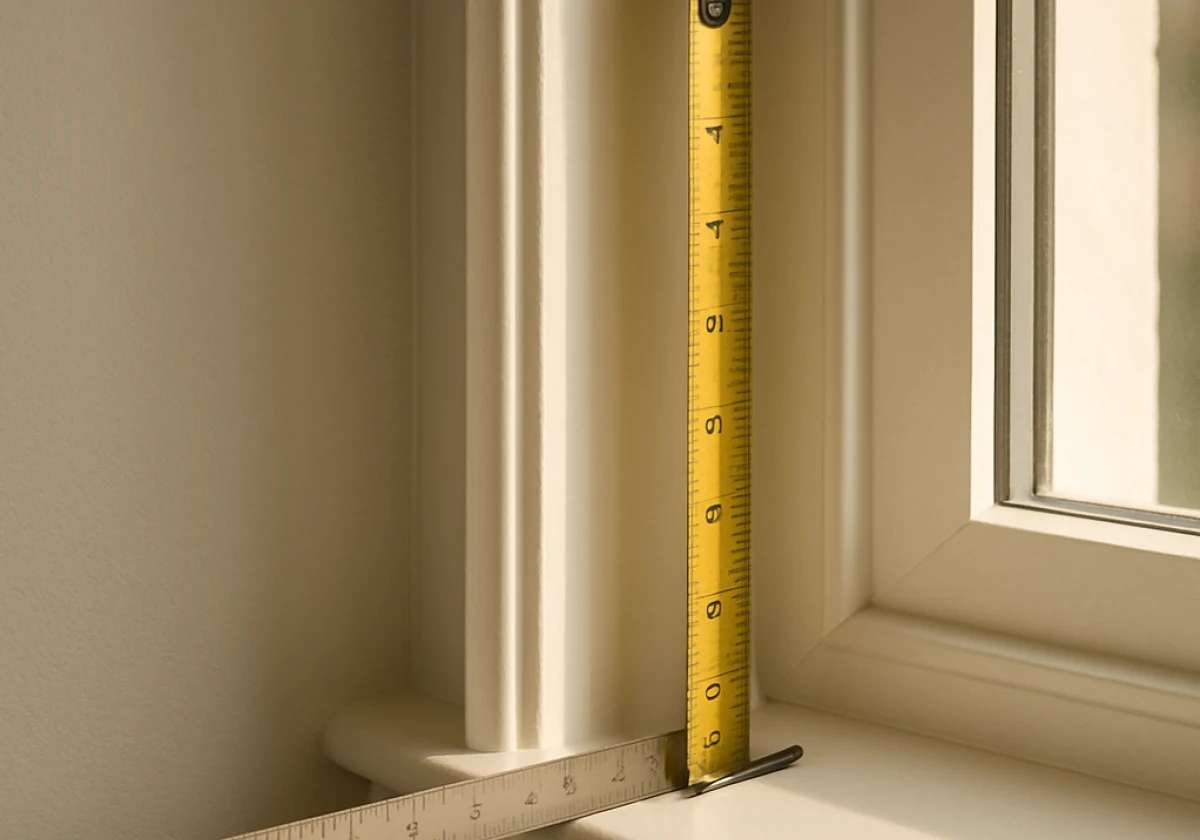
With your prep done, the next step is choosing your fitting type. A recess-fit blind sits inside the window opening, while a face-fit blind mounts on the architrave or wall. The recess depth and your preferred look will help you decide.
Compare both fitting options before taking your measurements.
| Fit type | Where the blind sits | What you measure |
|---|---|---|
| Inside Mount (Recess Fit) | Inside the window frame | Width and drop in three places; smallest wins |
| Outside Mount (Face Fit) | On the architrave or wall above | Width plus 50 mm of overlap on each side |
Your fitting choice also affects how well the blind covers the window. Gaps around windows can contribute to heat loss, so it’s worth considering how closely the blind will cover the opening. The Australian government’s YourHome guide explains how windows affect a home’s heating and cooling needs.
A recess fit gives the window a neat, built-in look, provided there’s enough depth for the blind. However, locks and handles can take up valuable space inside the frame. A face fit avoids this depth issue, covers more of the opening and can make a small window appear larger. So check the recess depth before deciding which option suits your window.
How to Measure for Roller Blinds Step by Step
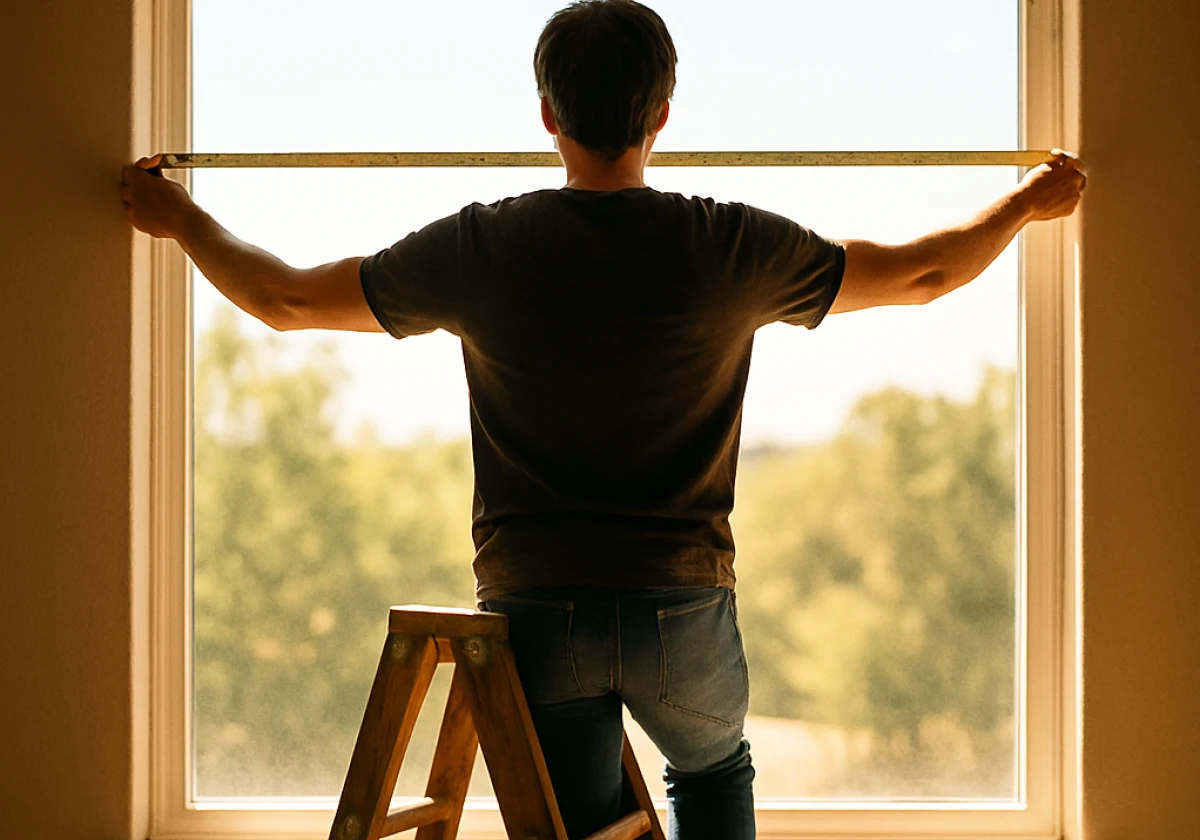
Once you’ve chosen your fit, accurate readings will help reduce light gaps. The order of the steps counts as much as the numbers themselves, and any blind installation guide worth following says the same.
Work through these five steps every time you measure for roller blinds, one window at a time:
- Measure Your Width in Three Places: Take readings across the top, middle and bottom of the window recess. Differences between these figures can reveal an uneven opening that affects the blind’s fit.
- Calculate Your Drop in Three Places: Check the distance from the top of the recess to the sill on the left, centre and right. These readings account for sloping sills and variations in window height.
- Choose the Smallest Measurement: For a recess fit, use the smallest width reading to help prevent the blind from rubbing against the sides. Check the manufacturer’s instructions for any required deductions before ordering.
- Allow for Overlap: A face fit needs enough coverage beyond the window opening to help reduce light gaps. Adding 50 mm to each side and 50 mm above the window provides a useful starting point, depending on the blind and fitting requirements.
- Check the Bracket Clearance: Most roller blinds need about 60 mm of depth for the brackets and roller. Handles and locks that stick out can obstruct the mechanism, so account for them when choosing the fitting position.
Quick Tip: Measure width first and drop second, then keep that pair in the same order on every note. Order forms ask for a width and a height measure in that sequence, and a swapped pair is the one mistake the factory can’t catch for you.
Finally, check every window separately, even if two openings look identical. Even similar-looking windows can have slightly different measurements.
Curtains, Venetian Blinds and Shutters Call for Different Numbers
Curtains and other blinds need slightly different readings from roller blinds, so it’s important to know how each type fits before you start measuring.
For curtains, measure the full width of the track rather than the window opening. Extend the track 150 mm past each side to give the curtains enough overlap and help reduce light gaps.
After you’ve measured the width, decide where you want the curtains to finish. Sill-length curtains should stop 10 mm above the sill, while floor-length curtains should sit 10 mm above the floor. These small gaps keep the fabric from dragging or catching as it hangs.
Venetian blinds also need measurements at three points to account for uneven window openings. So check the height carefully so the bottom rail sits level with the sill. Vertical blinds follow a similar method, but you’ll need to allow enough space for the track above the opening.
The room’s conditions can help you choose the right material. Bathrooms often have high moisture levels, which can cause timber blinds to swell. Aluminium venetian blinds are generally a better choice for these spaces.
Plantation shutters need extra care because installers fit their frames as a single unit. Even a 5 mm measurement error can leave a visible gap, so check that the window opening is square before ordering. Older homes often have uneven openings (making this check especially important).
Double Check Your Numbers, Then Order With Confidence
Accurate dimentions help you order blinds that fit your windows properly. Record three width measurements and three drop measurements for each window, then note the smallest figures and label them with the correct room. Nothing about the process is hard once you slow down.
Walk around the house with your list and look at each window a second time before you place the order. Ten minutes of rechecking protects every dollar you’re about to spend.
If you’d like help getting the measurements right, Fleeting Youth Records supplies custom blinds, curtains and shutters for homes across Australia. Contact us for a free measure and quote when you’re ready to get started.