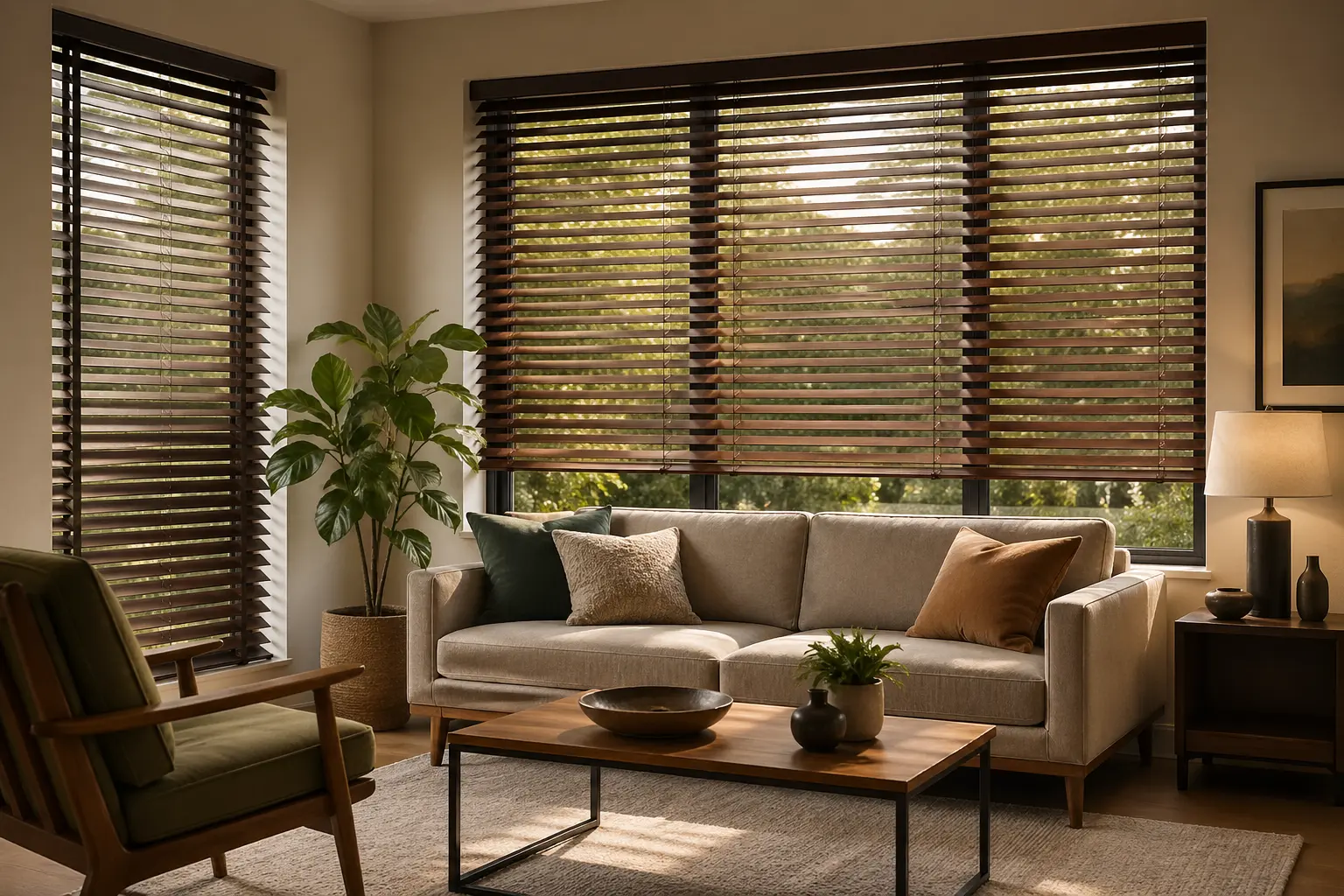
Venetian blinds bring timeless appeal to any room, but picking the right style means matching material, colour, and function to your space. You can’t just grab any window coverings and hope they’ll work.
And different rooms need different approaches. What suits a living room won’t cut it in a bathroom or bedroom. Similarly, the windows in your home decor have specific needs based on how you use each space.
This guide walks you through the practical decisions about when to choose venetian blinds. You’ll also learn which materials handle moisture best, how slat width affects appearance, and which colours work with different interior styles.
Let’s get started.
Why Material Makes a Difference When You Choose Venetian Blinds
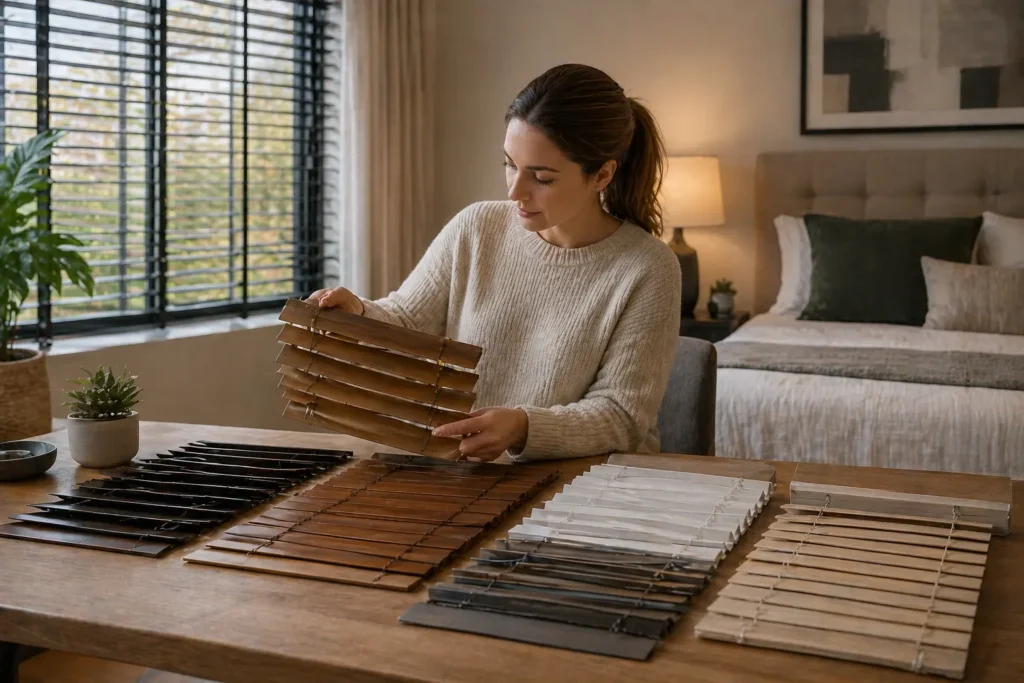
Each material serves different purposes, so the choice of window blinds depends on the room’s needs and style preferences. That’s why material selection is the first element to consider when choosing venetian blinds.
While choosing material, consider these three options first:
Timber Brings Warmth to Your Living Room
Real wood venetian blinds add natural texture and warmth by creating a cosy feel in main living areas. For example, timber fits beautifully in Scandi, traditional, and coastal interiors where organic materials feature prominently (and let’s be honest, nothing beats the look of real wood).
These wooden blinds also age gracefully and develop character over time while keeping their structural integrity. Specifically, western red cedar and other quality timbers maintain their warmth for years without losing appeal.
Aluminium Works Best for Moisture-Prone Areas
For spaces where moisture is a concern, aluminium becomes the wiser pick. Aluminium venetian blinds resist moisture and humidity, which makes them ideal for bathrooms, kitchens, and laundries. They’re also lightweight, low-maintenance, and come in modern finishes suited to contemporary home decor.
Their metal slat versions won’t warp or deteriorate even in steamy environments where timber would struggle. We’ve seen a Brisbane bathroom fitted with aluminium venetians three years back, still looks brand new despite daily shower steam.
Faux Wood Offers Budget-Friendly Versatility
Faux wood venetians act as a middle-ground option (between wood and aluminium options) and mimic timber’s appearance at a lower price point without sacrificing visual appeal. They also handle moisture better than real wood while offering similar warmth and texture to the space.
In practice, this material suits most rooms and offers a wide range of options without stretching your renovation budget.
Matching Slat Width to Your Window Size
Have you ever noticed how some venetian blinds look perfectly proportioned while others seem a bit off? Well, it usually comes down to the slat width. Wider horizontal slats suit larger windows better, while narrower slats work well for smaller or more compact windows.
Speaking about measurement, narrow slats (around 25 mm) create neat, proportional coverage on smaller casement windows and compact spaces. Their slimmer profile keeps the window styles looking balanced without overwhelming the room. By contrast, wider slats (50 mm or 63 mm) suit double-hung windows and large picture windows with a bolder presence and style.
When these proportions go wrong, a 25 mm slat on a huge sliding window looks cluttered. And the same issue happens with double-hung windows when oversized slats make them look just as awkward. Meanwhile, a 63mm slat overwhelms a small bathroom or sliding window by making the space feel cramped.
Colour Selection: Creating Harmony with Home Decor
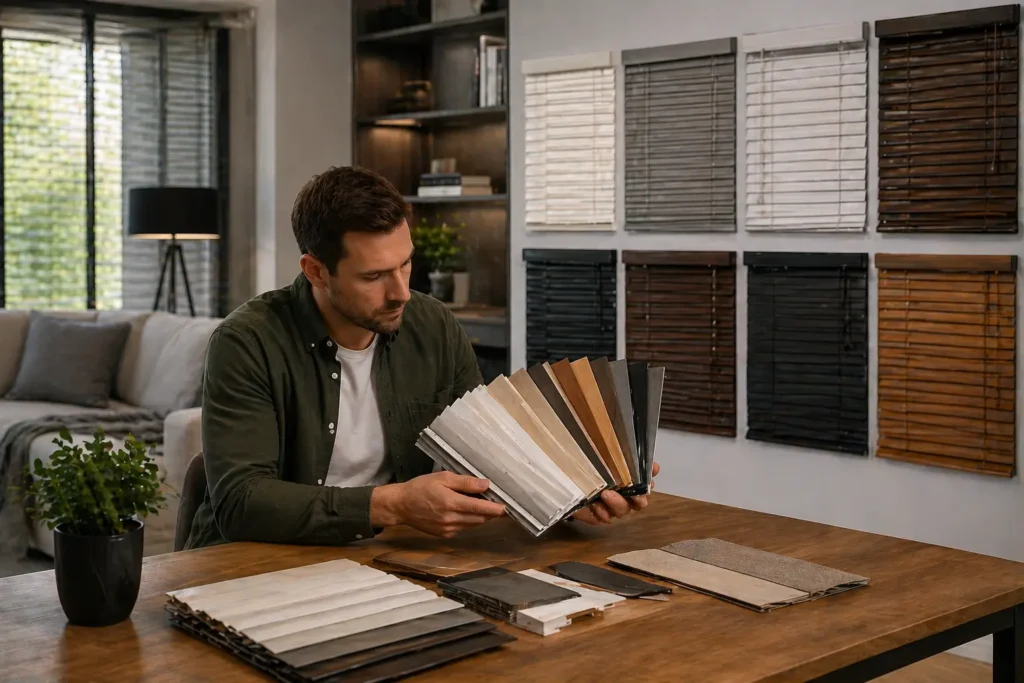
Venetian blinds generally come in enough colour options to match any interior style imaginable. Here are strong colour options that fit your style:
- Neutral Tones for Minimalist Spaces: Whites, greys, and beiges create clean backdrops that let furniture and artwork take centre stage in modern interiors. These shades work as a practical choice when keeping living spaces uncluttered.
- Bold Colours as Statement Pieces: If you want to add personality to a neutral room, deep blues, charcoal, or forest green venetian blinds become instant focal points here (think feature wall but for windows). They complement existing furniture while adding an elegant touch.
- Wood Tones for Traditional Interiors: Heritage homes and classic furniture arrangements call for natural timber finishes. Timber venetians in honey or walnut tones bring warmth to living rooms and bedrooms without competing for attention. These colours also add richness that suits traditional interiors beautifully.
- White and Cream for Coastal Vibes: Light, airy tones reflect natural light beautifully, enhancing that breezy, relaxed feel coastal homes are known for. Also, white and cream shades can make smaller windows appear larger while keeping beach-style living spaces feeling open and fresh. That said, the palette creates an aesthetically pleasing backdrop for coastal home decor.
- Dark Shades for Modern Aesthetics: Contemporary spaces with bold architectural features benefit from strong contrast. Especially, black, charcoal, or espresso venetian blinds add modern elegance and clean lines to minimalist interiors. That kind of stylish finish works specifically well against white walls, creating visual drama without extra effort.
Keep in Mind: When picking a colour, consider what’s already in the room. Because the blinds should complement the space rather than clash with it.
Light Filtering vs Blockout: What Suits Your Space?
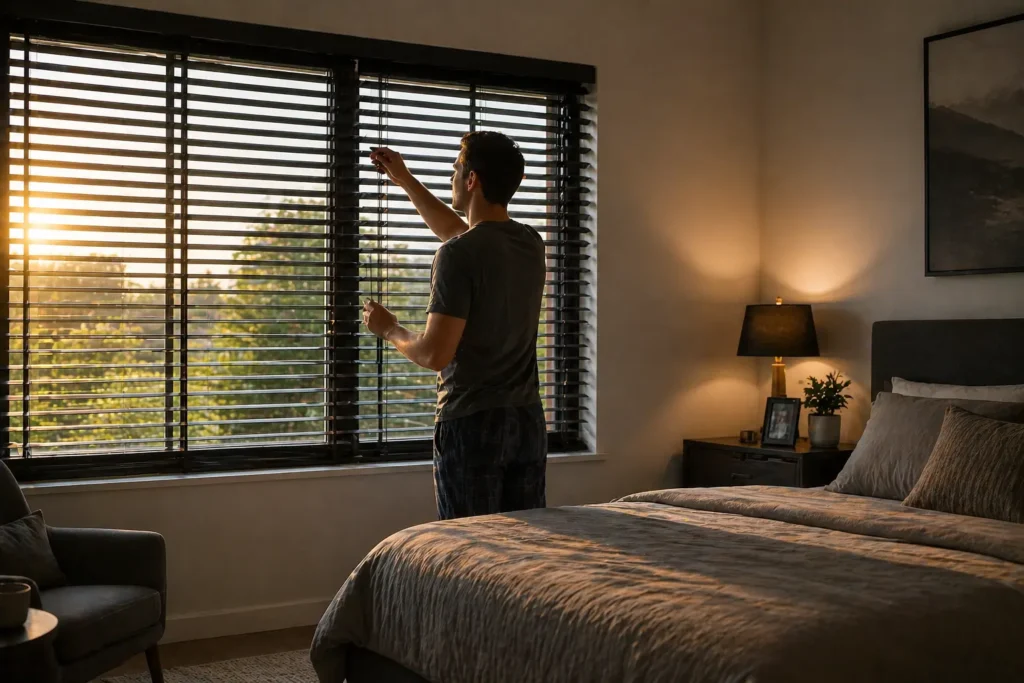
Window blinds let you control how much light enters a room throughout the day. This level of control helps manage light levels that affect sleep quality and glare. That’s why the way you use the space usually determines how much light control you need.
The following three main approaches cover most situations:
Light Filtering for Soft Ambience
Light filtering venetian blinds soften harsh sunlight while maintaining privacy, and they are perfect for living rooms and home offices. In practice, their gentle, diffused light feature reduces glare on screens without making the space feel dark.
On top of that, these blinds let natural light filter through during the day while protecting furniture from UV damage. This means you get excellent light control without blocking all the light entering a room.
Blockout Blinds for Bedrooms and Media Rooms
For spaces where complete darkness is needed, blockout venetian blinds eliminate light when closed. This becomes essential for quality sleep and comfortable screen viewing.
Apart from that, many people layer blockout roller blinds behind sheer roller blinds for ultimate flexibility between privacy and natural light. And the result is complete darkness at night while allowing adjustable light levels during the day.
So when you fit blockout blinds in a master bedroom, better sleep becomes noticeably easier (no more 5 Am sunlight interruptions).
Should You Consider Motorised Blinds?
Managing multiple blinds or reaching high windows can create a daily hassle. However, motorised blinds solve this issue by adding convenience for hard-to-reach spots or when controlling several blinds at once.
They typically integrate with smart home systems via a wall switch, which lets the system program light control based on time or sun position. Frankly, this is worth the investment for large windows or if accessibility is a concern.
Bottom line: Effortless control suits busy households where manual adjustment becomes tedious.
Custom Sizing vs Standard Measurements
Getting the right fit affects how your blinds look and how well they work. For instance, a poor fit can leave gaps, block less light, or look out of place. To avoid that, it helps to understand when standard sizes work and when custom sizing makes more sense.
Standard and custom blinds each have their place depending on the situation:
Aspect | Standard Sizes | Custom Sizing |
Cost | Less expensive, budget-friendly | Higher investment upfront |
Availability | Immediate, off-the-shelf | Requires waiting weeks |
Best For | Common casement or double hung window measurements | Unusual shapes, arched openings, non-standard dimensions |
Fit | Works for typical new builds | Perfect fit, eliminates light gaps |
Customisation | Limited range of options | Specify exact materials, colours, and features |
Installation | Straightforward window dressing projects | Older homes, unique requirements |
In short, the main difference comes down to this: standard blinds offer speed and savings, while custom options provide a perfect fit and flexibility.
However, accurate measurement is important for both options before buying, as it helps prevent ordering blinds that do not fit properly. If you want to buy inside-mount blinds, you should measure the width at 3 points: the top, middle, and bottom. Here, using the narrowest measurement ensures the blinds fit without rubbing against the frame.
For outside-mount installation, where blinds are fitted on the wall above the window, you need to add extra width and height beyond the window frame. This allows the blinds to fully cover the frame and edges, which helps block light from entering around the sides.
Most importantly, double-check all measurements before ordering custom blinds, since mistakes become expensive to fix later.
Find Blinds That Actually Suit Your Style
Choosing venetian blinds goes beyond picking something that fits the window frame. The decision involves balancing function with style, considering the room’s purpose, the overall aesthetic, and practical needs like moisture resistance or light control.
Take time to compare materials, measure windows accurately, and don’t rush the colour decision. These blinds will be part of the living space for years, so getting them right from the start saves hassle later.
Ready to find blinds that match the space? Browse the collection at Fleeting Youth Records to explore options suited to any interior style.