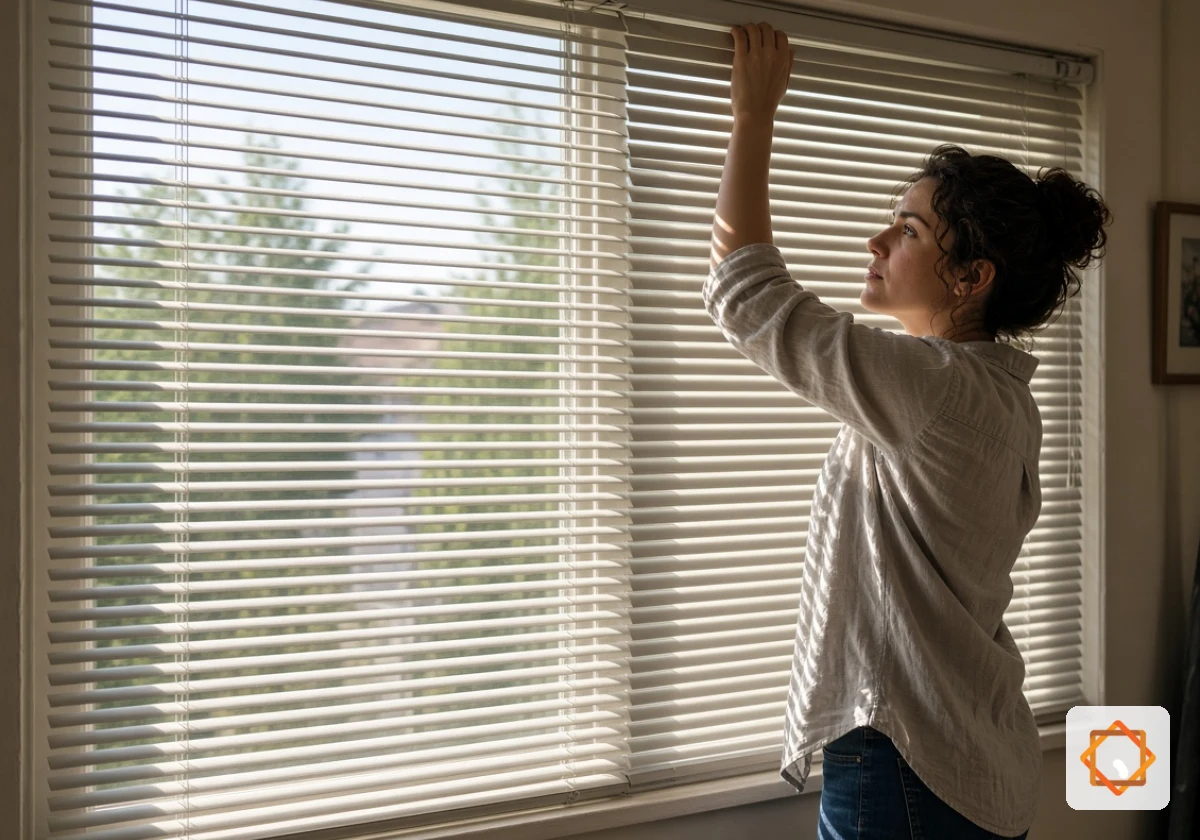
Venetian blinds tilt unevenly because one part of the tilt mechanism or ladder strings has slipped, worn or jammed. A quick check tells you whether it’s a fix at home or a job for a repairer. Better still, most of that check needs only your eyes and a steady step stool.
Finding the fault early also saves you living with a half-lit room, since Venetian blinds not tilting evenly leave one side in glare while the other stays dim. Here at Fleeting Youth Records, we’ve specialised in measuring and fitting Venetian blinds for two decades. Uneven tilting is one of the most common faults we see.
Drawing on those jobs, this guide walks you through the five faults behind uneven tilting and the checks you can run with the blind still hanging. It also explains which repairs suit a home fix.
Why Do Venetian Blinds Stop Tilting Evenly?
Every slat should turn together, because the tilt rod, the gears inside the headrail and the ladder strings all move as one system. When any single part slips or wears, the slats fall out of sync. The pattern of the unevenness hints at which one has failed.
We’ve laid out the five faults behind it in the order you’d reach them, from the wand upward.
1. The Tilt Wand Has Popped Off Its Hook
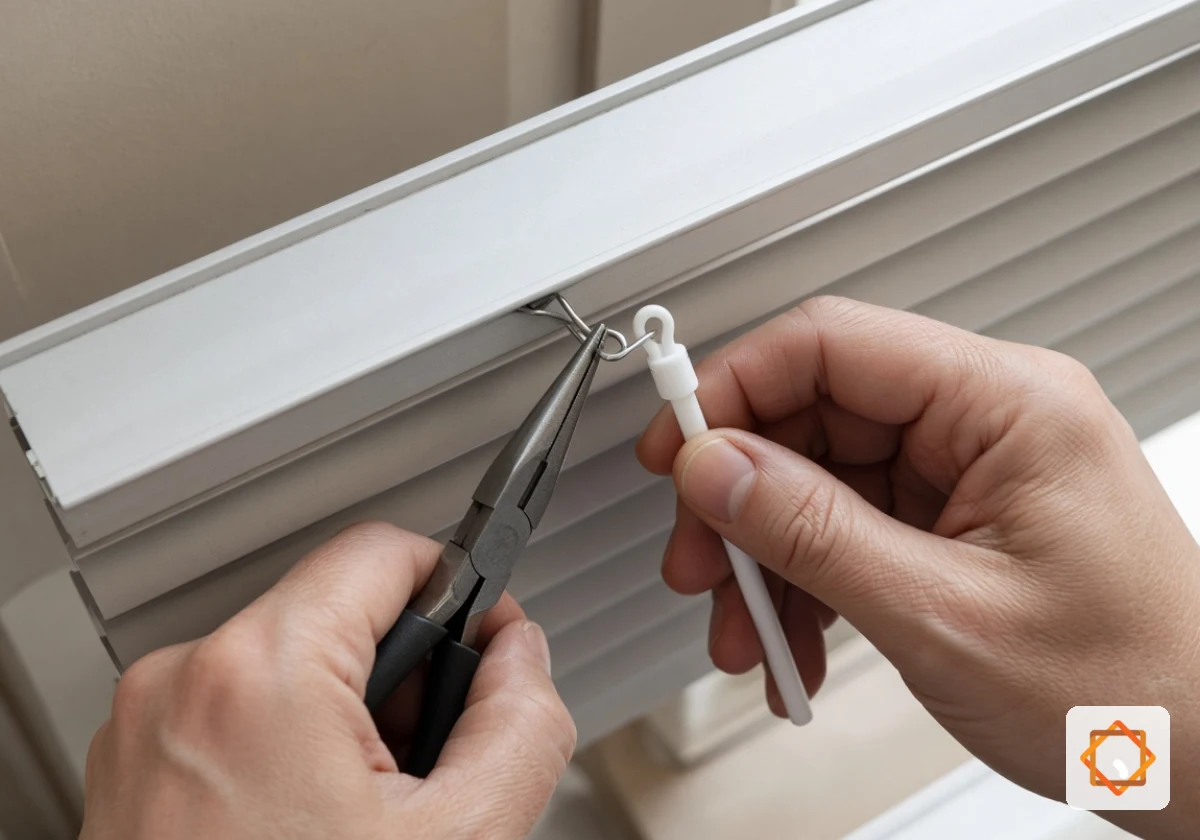
A tilt wand hangs from a small wire hook on the end of the tilt rod. Once the wand’s loop slips half off that hook, it only turns the rod part of the way. The slats then tilt in jerky steps or stop short of closing.
You can usually spot this by looking up at the headrail, since a half-hooked wand hangs at a slight angle instead of straight down. It’s tempting to twist the wand harder before looking up (which is exactly how those thin wire hooks bend).
To fix it, seat the loop fully back over the hook. Then pinch the hook closed with pliers so the wand can’t slide off again. If the hook has snapped rather than bent, you’ll need a replacement wand and hook that suit your blind’s tilt rod.
2. Worn Gears Inside the Venetian Blind Tilt Mechanism
Every twist of the wand runs through the tilter, a small gearbox at one end of the headrail. Inside, a worm gear drives a smaller gear on the rod. These gears are usually plastic, so their teeth wear down with years of daily use.
Rounded teeth can’t grip each other properly. The wand spins or clicks while the slats barely move, often with a faint grinding on older blinds. Forcing the wand past its stop makes the grinding worse, since each hard twist strips a little more off the teeth.
Your ears are the best test here. Turn the wand slowly with your head close to the headrail, and listen for a click with no slat movement. That sound means the tilter needs replacing, while smooth, quiet movement clears it and points you toward the ladder strings next.
3. Ladder Strings That Have Slipped or Stretched on One Side
When the gears pass, look at how the slats sit across their width. A slipped ladder string usually shows up as slats that close tight on the left and gap on the right. With the blind shut, light leaks through in thin wedges on the gapping side.
The cause sits in the ladder strings, the woven cords that hold each slat like the rung of a ladder. They wrap around drums on the tilt rod, which lift one side of every slat as the other drops. If one string slips on its drum or stretches with age, that end will sit lower than the other.
A tape measure gives you a firmer answer than your eyes. Check the space between the same two slats at each end, and a difference of even a few millimetres points to that side’s drum or string.
From there, the fix depends on which one it is. A slipped string can often be eased back into place on its drum, while a stretched string won’t tighten up again and needs a new ladder.
4. Bent Slats Catching on Their Neighbours
Run your hand slowly down the closed stack whenever only a few slats lag behind. A bent slat feels like a ridge or a dip under your palm, and its curve presses on the slat above or below. That pressure holds back its neighbours while the rest of the stack keeps tilting.
What you find depends on the material, since damage looks different across blind types like timber, aluminium and PVC. Aluminium slats crease easily, while timber and faux wood tend to warp in strong afternoon sun (west-facing windows cop the worst of that summer heat).
For a creased aluminium slat, tilt the blind open and gently press the crease flat between your thumb and fingers. Work from the middle outward so you don’t put a new kink in the edge. A warped timber slat won’t flatten, though, so a spare slat kept on hand makes the swap quick.
5. Lift Cords Tangled Through the Ladders
Lift cords tangle most often when you raise the blind at an angle, with one side climbing faster than the other. Those cords raise the blind through a hole in each slat, so a slack one can easily loop around a ladder rung. A caught cord then drags its side of the slats out of line with every tilt.
Lowering the blind fully lets the cords hang slack, so you can follow the snagged one down slat by slat. Ease each loop off its rung by hand rather than tugging the cord from the bottom, which only pulls the wrap tighter. A quick raise and lower afterwards shows you whether the slats now sit level.
Before you leave the blind, sort out the loose loop for child safety as well. Consumer Affairs Victoria’s 2025 warning links unsecured window covering cords to the strangulation deaths of one or two Australian children each year. A cleat fixed at least 1,600 mm above the floor holds the window cord well away from small hands.
Checking the Installation Before Blaming the Tilt Mechanism
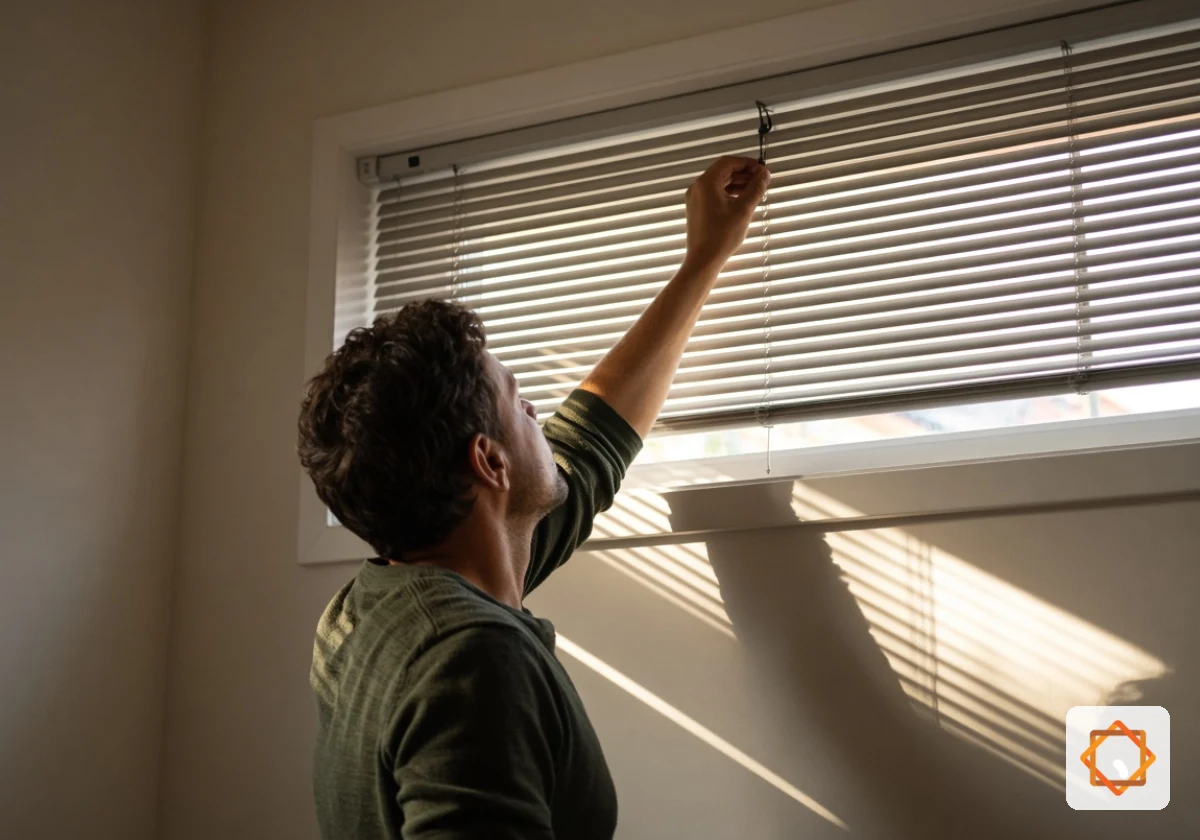
With those five causes in mind, you might want to reach for a screwdriver straight away. Taking the blind down that early hides the fault, because you can’t see how the slats hang under their own weight.
While it’s still up, check the mounting and the space around the blind first. Problems there can mimic any of the faults above, so ruling them out saves you replacing a part that was never broken.
Wondering where to start? These five checks take a few minutes and need only a spirit level:
- Obstructions Near the Window: Tilt the slats fully and watch the bottom few as they turn. Any that brush a window winder, handle or sill will stall while the rest keep moving. Moving the obstruction or trimming the blind’s drop usually clears it.
- Headrail Level: A sloping headrail makes even slats look uneven. A spirit level held along the top rules it out in seconds. If the bubble drifts, loosen one bracket and adjust it until the headrail sits flat.
- Loose Brackets: Push gently on each bracket in turn. When the headrail rocks, a screw has likely worked loose from the wall or frame. Tighten it, or swap in a longer screw if the old hole has worn out.
- Sagging Centre: On a wide blind, look along the headrail for a dip in the middle. That sag usually means the blind is missing a centre support bracket. Adding one takes a drill and a few minutes, and it stops the tilt rod bending under the weight.
- Tilt Rod Movement: Watch both ends of the rod while you twist the wand slowly. If the far end lags or stays still, the rod has slipped inside the tilter. Pushing it back into the gear housing often fixes the lag without new parts.
If all five checks pass, the fault sits in one of the parts covered above. Work through those tests from the wand up, and stop at the first one that fails.
Uneven Blind Slats: Which Fixes You Can Do at Home
Matching your symptom to a fix tells you how big the job is. Most of these common problems need only your hands, while worn gears and stretched ladders involve parts inside the headrail.
The table below pairs each symptom with its likely cause and home repair.
| Symptom | Likely Cause | Home Repair | DIY Job? |
|---|---|---|---|
| Slats tilt in jerks or stop short | Wand off its hook | Reseat the loop and pinch the hook closed | Yes |
| Wand spins or clicks, slats barely move | Worn tilter gears | Replace the tilter with one that fits the headrail | Needs parts |
| One end sits lower than the other | Slipped ladder string | Ease the string back into place on its drum | Yes |
| One end sits lower, and the gap won’t close | Stretched ladder string | Replace the ladder and restring the blind | Needs parts |
| A few slats stick while others turn | Bent slat | Flatten aluminium by hand or swap a warped slat | Yes |
| Slats drag out of line on one side | Lift cord tangled in a ladder | Lower fully and straighten the cord | Yes |
The two rows marked “Needs parts'” are where a repairer comes in, since tilters and ladders have to match your exact headrail. A photo of the tilter and the brand label speeds up any parts order.
Some Venetian Blind Repair Problems Aren’t Worth Fixing Yourself

Parts alone do not settle the question, though. A stripped tilt gear on a cheap aluminium Venetian blind can cost as much in parts and time as a new blind. Tilters come in many shapes, so getting a precise fit on an older headrail often means ordering a few and sending the wrong ones back.
Restringing a ladder is the other repair that tends to blow out. You’ll need to remove every slat, thread new ladder and lift cords, then rebuild the stack in order (it’s a full afternoon’s job on a standard window).
A rebuild also brings cord safety into the job. The Queensland Government’s cord height advice from 2024 says the bottom of any blind or curtain cord should sit at least 160cm above the floor. Any restrung blind needs its cords finished at that height before it goes back up.
On the flip side, wide wooden Venetian blinds or faux wood blinds usually justify the repair, since a new tilter costs a fraction of a replacement blind. A large timber blind in a living room is usually worth saving, while a small aluminium one in the laundry rarely is.
You know your own patience best, too. If threading dozens of slats sounds like a miserable weekend, that’s a fair sign the blind is ready for replacing.
Fix Your Blinds or Book a Quote for New Ones
Start this weekend with the free fixes: the wand hook, any bent slats, tangled cords, and a slipped ladder string. Check the brackets and headrail level at the same time, since a loose mount can undo every other repair. If a worn tilter or stretched ladder is the culprit, write down the headrail brand and width before ordering parts.
After the repair, two habits keep the slats tilting evenly. Raise the blind with both sides climbing together, and stop twisting the wand as soon as the slats close. Both take strain off the gears and ladders that wear out first.
Ready to replace a blind that’s past saving? Contact Fleeting Youth Records to book a free in-home measure and quote for new Venetian blinds that suit your windows.