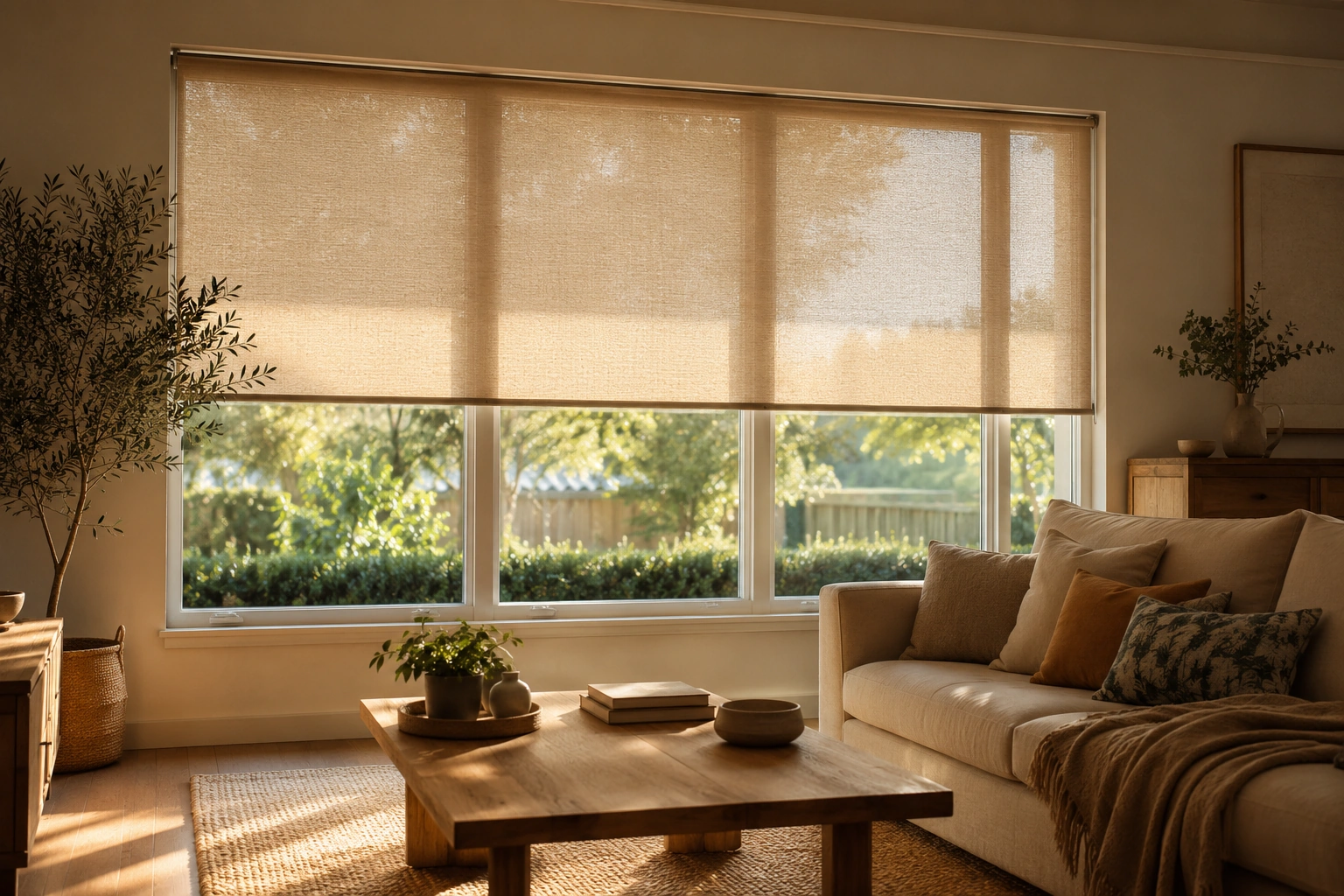
Choosing the right blind colour starts with knowing how your room operates. The light it gets, the materials in it, and how the space is used all affect how it looks once installed.
Most people work the other way around. They find a shade they like, order it, then notice something feels off once it’s installed. This guide covers blind choices room by room so you can approach each space with a clear, practical direction.
But first, let’s look at why one option rarely works across every room.
Why One Blind Colour Doesn’t Work for Every Room
As mentioned, one blind colour doesn’t work for every room because light, function, and existing materials all change how a colour reads once it’s installed.
A warm white that looks fresh in a north-facing living room can look flat in a south-facing bedroom. Whereas a dark blind that creates a cosy bedroom might feel too heavy in a small home office.
That’s why you should always look at the room first before choosing a colour.
How Your Room Affects Your Blind Colour Choice
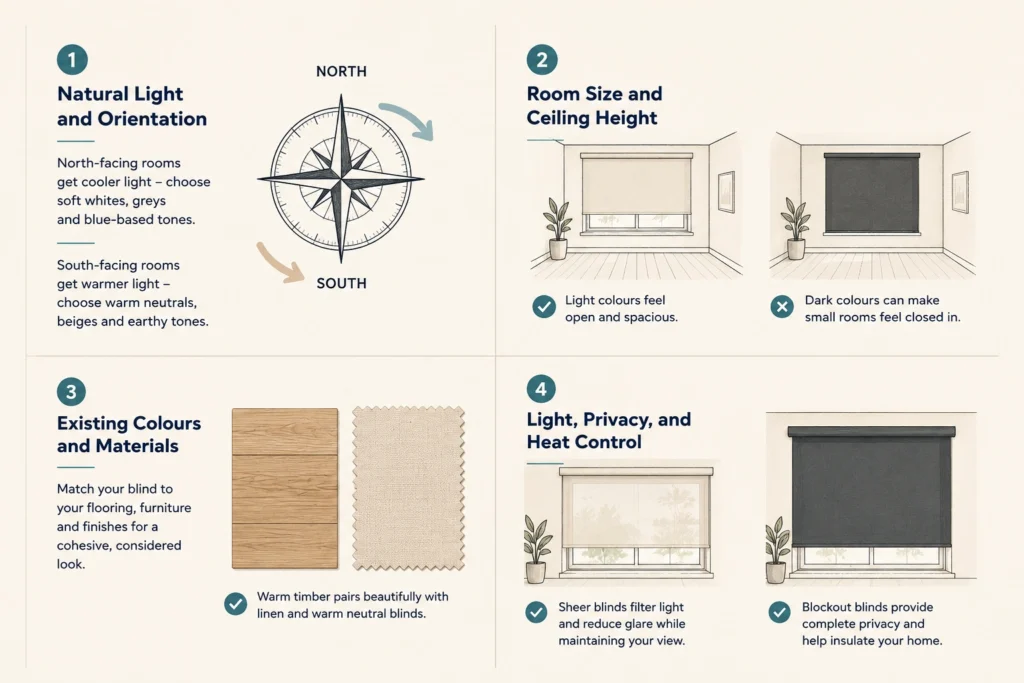
Four factors decide whether a blind colour works in your space: light, size, what’s already in the room, and how you’ll use the space day to day. We’ll walk through each one.
Natural Light and Room Orientation
Natural light affects how a blind colour appears, and your room’s orientation determines the type of light it receives.
North-facing rooms in Australian homes get more direct sunlight, so cooler or neutral colours help balance the warmth. Meanwhile, south-facing rooms receive softer, weaker light, and darker shades can make them feel smaller and dimmer.
East and west-facing rooms need a slightly different approach because their light changes throughout the day. East-facing rooms get stronger morning light, so softer neutrals can help keep the room feeling balanced without making it feel harsh.
By contrast, west-facing rooms receive warmer afternoon sunlight, so cooler tones can help offset the extra warmth later in the day.
Room Size and Ceiling Height
Small rooms give you less margin for error with colour. A dark or bold blind creates strong contrast against the walls, which can make the space seem tighter than it is. Lighter colours blend more smoothly and help the room look more open.
Larger rooms are more forgiving. They can handle deeper, bolder colours without looking heavy, and darker tones can add warmth to a space that feels too bare. Low ceilings follow the same principle as small rooms.
Lighter tones draw attention upward, while high ceilings give you more freedom to go darker without making the room seem closed in.
Existing Colours and Materials
The colours and materials already in your room narrow down your options. For example, warm timber floors have golden and brown tones, so blinds in shades like beige, cream, or linen often create a more natural match. Cool greys can work too, but they create a sharper contrast.
As a general rule, go for blind colours that share the same warm or cool undertones as the surrounding finishes. This creates a more balanced and intentional look throughout the room.
Light, Privacy, and Heat Control
Most people focus on colour, but fabric plays just as important a role when it comes to light and privacy.
Sheer blinds soften natural light and provide daytime privacy without making a room feel dark or enclosed. If you’re trying to keep a room cooler in summer, lighter colours are often a better choice.
Colour is only one part of heat control. The blind’s material and backing also affect how much heat enters the room. Darker blinds tend to absorb more solar heat, while highly reflective ones can reduce heat gain by around 45% when fully closed.
Should Blinds Match the Walls or Contrast?
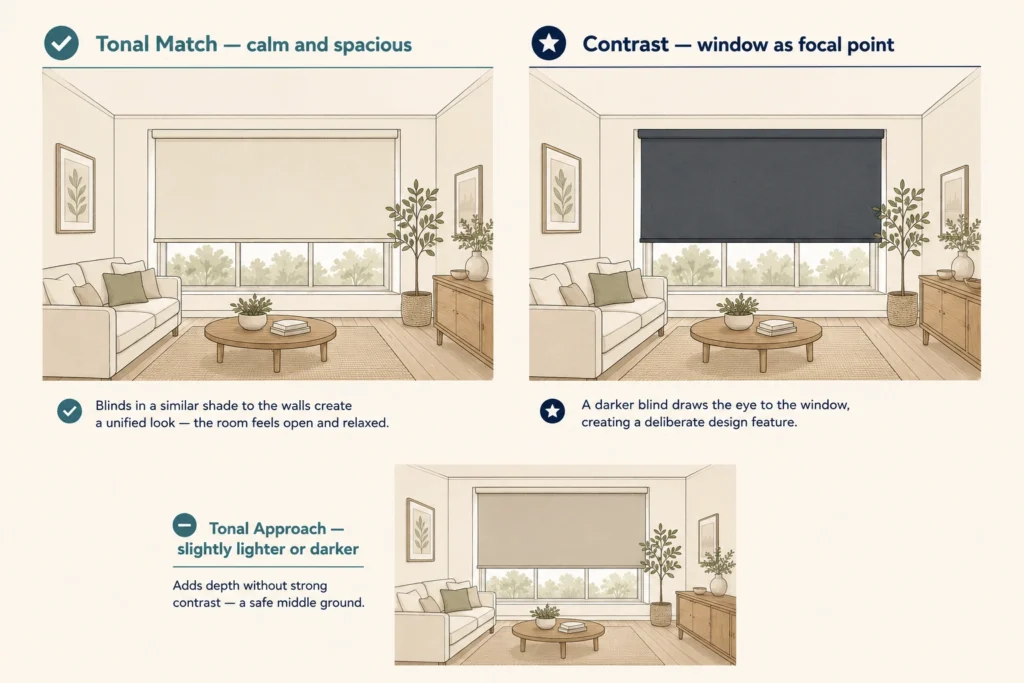
There’s no single right answer. If you want the room to feel calm and spacious, matching your blinds to the wall colour is usually the safer choice. Since the colours blend together, the eye moves through the space more easily, and the room feels less busy.
Contrasting blinds create a different effect. They stand out against the walls and naturally draw attention to the window, which can work well if the room needs a stronger focal point.
If you’re stuck between the two, try a tonal approach. Choosing a blind that’s slightly lighter or darker than the wall colour adds some depth without creating a strong contrast.
Best Blind Colours for Every Room
Each room has different lighting, privacy, and practical requirements. The colours below are a good starting point based on how the space is typically used.
| Room | Recommended Colours | Best Blind Type | Why It Works |
| Living Room | Warm neutrals, linen, sand, soft white | Timber venetian, roller blinds | Versatile across varied light and activity |
| Bedroom | Warm white, pale grey, dusty blue | Blockout roller, sheer, curtains | Supports light and privacy, suits a restful atmosphere |
| Kitchen | White, cream, light grey | Aluminium venetian blinds | Handles moisture, adjustable slats for tilt and light control, durable and easy to wipe down |
| Bathroom | Crisp white, soft stone | Aluminium blinds | Moisture-resistant, durable, works against tiles and fittings |
| Home Office | Warm grey, soft taupe | Roller blinds | Reduces glare, precise light control |
Use these recommendations as a starting point rather than a rule. A bright room with plenty of natural light can often support darker blind colours, while smaller or dimmer spaces usually benefit from lighter shades.
It’s also worth considering whether you want the blinds to blend into the room or stand out as a design feature. The right choice is the one that works with your lighting, décor, and privacy needs.
Safe Blind Colours That Work Almost Anywhere
With so many colours, fabrics, and finishes available, choosing window coverings can quickly become overwhelming.
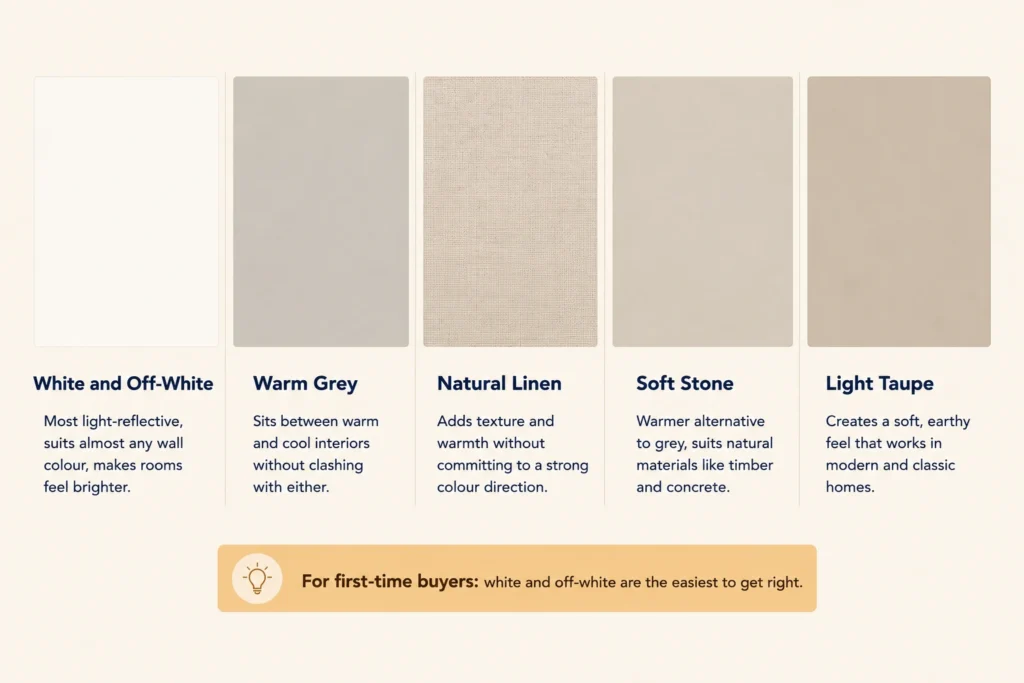
If you’re not sure where to begin, these are some of the shades that work well across almost any room.
- White and Off-White: The most light-reflective option on this list. They sit comfortably against almost any wall colour and tend to make rooms feel brighter and more open.
- Warm Grey: Sits between warm and cool interiors without clashing with either. A reliable choice when the room has a mix of tones.
- Natural Linen: Adds texture and warmth without committing to a strong colour direction. Works particularly well in living areas and bedrooms.
- Soft Stone: A warmer alternative to grey that suits bathrooms, kitchens, and any room with natural materials like timber or concrete.
For homeowners choosing blinds for the first time, white and off-white are often the easiest colours to get right. They create a clean backdrop, allow other features in the room to stand out, and give you more freedom when updating furniture or décor later.
Choose Your Blind Colour With Confidence
You now know that choosing the right blind colour depends on more than personal preference. The room’s natural light, size, existing colours, and how you use the space all play a role.
Start with the room that needs the most attention. A bedroom may need better light control, while a living room may need a shade that adds warmth. Once you know what the room needs, use the factors in this guide to narrow your options and choose something that suits the space.
Ready to explore these options for yourself? Explore the Fleeting Youth Records’ blind range or get in touch with the team for personalised advice anywhere in Australia.
Frequently Asked Questions
Still deciding which blind colour is right for your home? These common questions cover the final details that can help you make your choice.
Do blockout curtains need to match the wall colour?
Not necessarily. Blockout curtains work best when they blend with the room rather than stand out, so choosing a shade close to your wall colour is usually the safer option. That said, a contrasting colour can work if the window is a deliberate focal point in the room.
Can plantation shutters replace blinds?
Yes, and the approach to choosing colours is similar. Lighter shutter colours keep rooms feeling open and airy, while darker tones add warmth and depth. The same factors that influence blind colour choices apply here too: light, size, and existing materials.
How do I choose a blind colour for light control and privacy?
Think about fabric first, then colour. Sheer fabrics filter light and provide daytime privacy without blocking the room off. If you need full privacy or blockout, go with a denser fabric in a mid to darker tone and adjust from there based on the room.
Are custom blinds worth it for getting the right colour fit?
Yes, custom blinds can be worth considering if colour is a priority. They usually offer a wider choice of fabrics and shades than ready-made options, making it easier to find a blind that works with your walls, furniture, and overall room style.