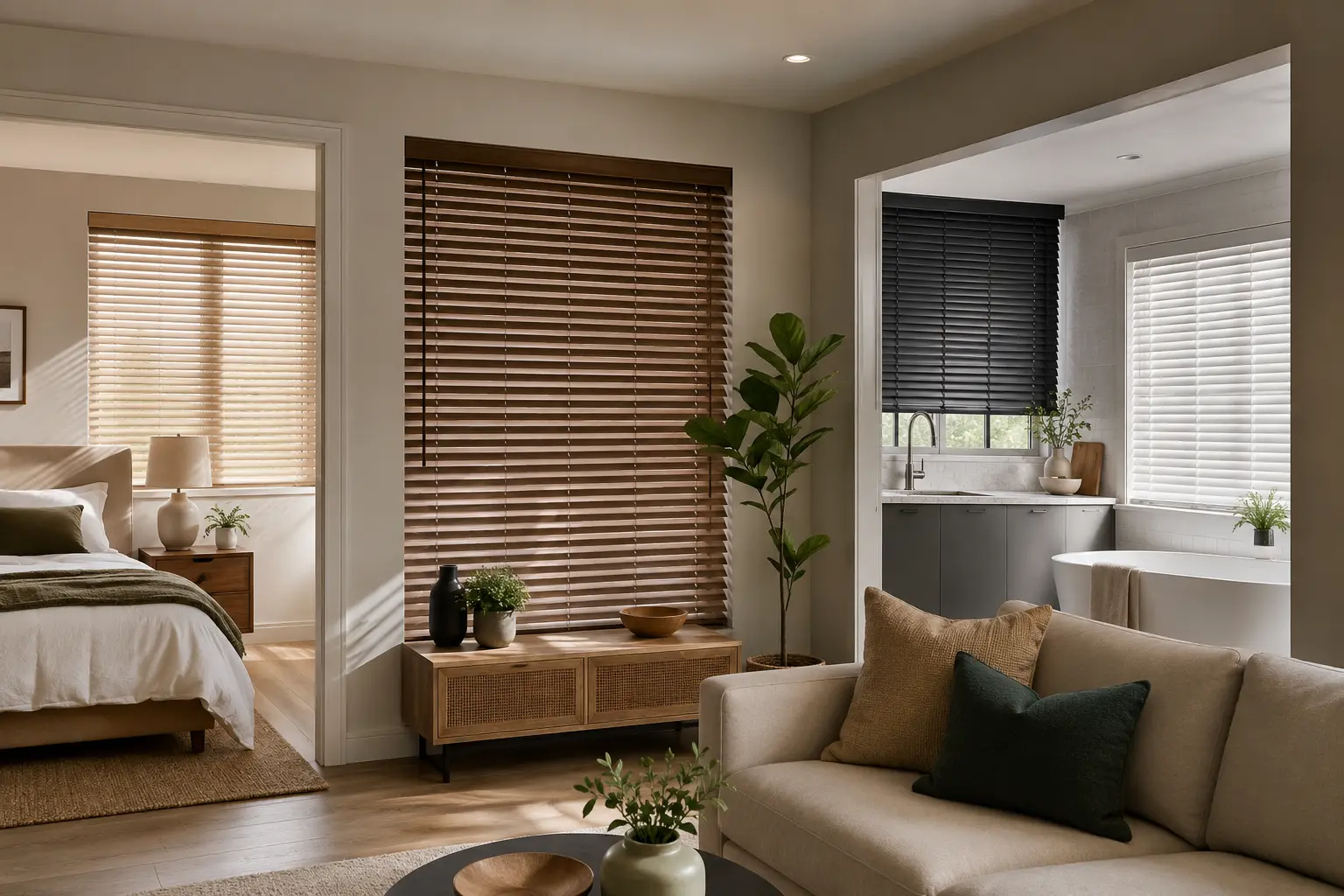
Ever walked into a store and felt stuck choosing between timber, aluminium, and PVC venetian blinds? Most people do, especially when every option looks the same online.
The truth is, no single venetian blind material works well in every room. Humidity, sunlight, privacy needs, and your interior style all affect which one lasts longest and looks best. So if you pick the wrong fit, you could end up with warping, fading, or a full replacement within a couple of years.
In this blinds buying guide, we’ll help you compare the most popular Venetian blind materials. You’ll also learn to match them to the right rooms and avoid costly mistakes.
Venetian Blind Materials Compared: Which Option Performs Best?
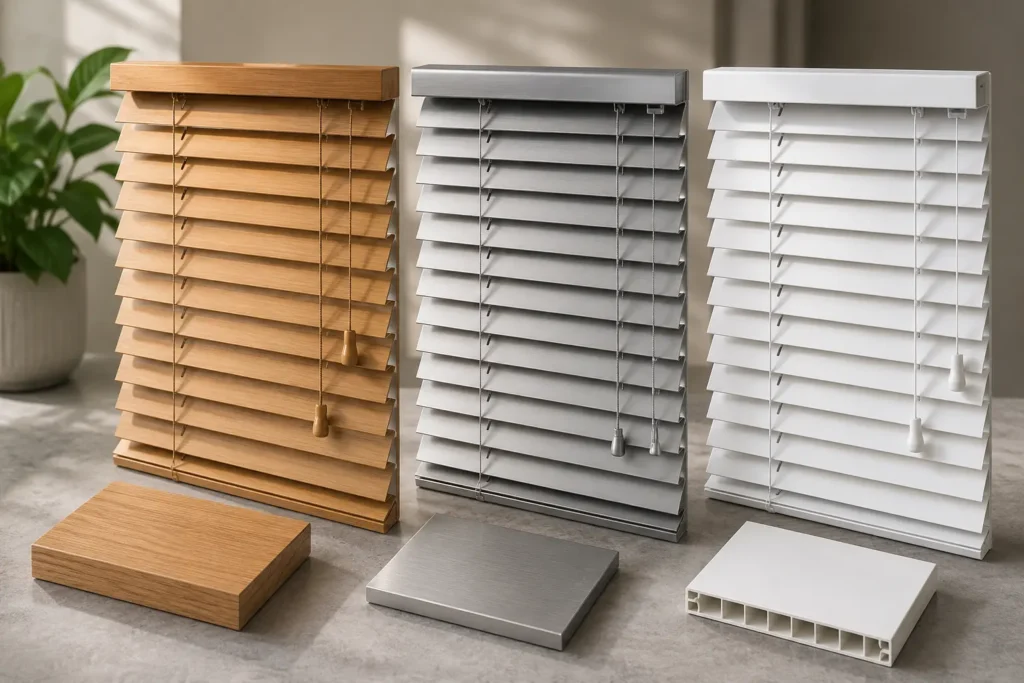
Timber, aluminium, and PVC are the three most popular venetian blind materials in Australia. As we mentioned, each one handles different rooms and conditions in its own way, so the best pick really depends on where you plan to install them.
Let’s break down what each material does well and where it falls short.
Timber Venetian Blinds for Warmth and Natural Style
Timber venetian blinds bring a warm, natural look that suits living rooms, bedrooms, dining areas, and home offices. The wood grain adds a premium feel you won’t get from synthetic options, and the adjustable slats give you solid light control and privacy throughout the day.
They pair well with a range of interior styles, including Hamptons, coastal, Scandinavian, and traditional designs.
One thing to keep in mind, though, is that timber venetians can fade under direct sunlight and warp when exposed to moisture over time. So they perform best in dry, climate-controlled rooms away from bathrooms or kitchens.
Aluminium Venetian Blinds for Durability and Everyday Practicality
If you need something tough and low-maintenance, aluminium venetian blinds are hard to beat. They resist moisture, rust, and fading without any special treatment (which makes them a reliable fit for kitchens, laundries, and commercial settings).
They’re also lightweight and easy to clean with a damp cloth or brush attachment. On top of that, aluminium venetians come in a wide range of colours and suit larger windows without adding bulk or blowing your budget.
The only downside is that the slats can bend or dent from climbing, jumping, or other heavy use. So they’re better suited to adult spaces than kids’ bedrooms.
PVC Blinds for Bathrooms and Wet Areas
For rooms with constant moisture, like bathrooms, laundries, and utility rooms, PVC blinds are the practical choice. They resist warping, fading, and mildew buildup, and they barely need any upkeep beyond a quick wipe-down.
Plus, the finish looks close to painted timber, so you still get a clean, modern appearance without the risk of water damage. We particularly recommend it to family homes or investment properties where low cost and durability are valuable.
Comparing the Three Materials at a Glance
With three solid options to weigh up, a side-by-side view will make the decision much easier. The table below covers the factors worth thinking about before you commit to a purchase:
| Feature | Timber | Aluminium | PVC |
| Best Rooms | Living rooms, bedrooms, dining areas | Kitchens, laundries, offices, and commercial settings | Bathrooms, laundries, and utility rooms |
| Moisture Resistance | Low | High | High |
| Durability | Moderate | High | Moderate |
| Maintenance | Regular dusting, occasional timber treatment | Wipe with a damp cloth | Wipe with a damp cloth |
| Style | Warm, natural, premium | Sleek, modern, minimal | Clean, painted timber look |
| Cost | Higher ($80–$150+ per sq m) | Budget to mid-range ($30–$70 per sq m) | Budget-friendly ($20–$50 per sq m) |
| Lifespan | 8–15 years with care | 10–20 years | 5–10 years |
| Australian Climate Suitability | Best in dry, temperate rooms | Suits all climates | Suits humid and wet rooms |
As you can tell, timber wins on looks, aluminium leads on longevity, and PVC gives you the best value in moisture-prone spaces. The right choice will come down to the room’s conditions and how much maintenance you’re willing to do.
How Australia’s Climate Affects Your Choice
Salty air gradually corrodes cheaper metal components in coastal areas such as the Gold Coast, Sunshine Coast, Perth, and many parts of Sydney. Strong UV rays also fade painted or stained finishes. Not to mention the high humidity, which causes natural timber to swell or warp over time.
Winter condensation, on the other hand, brings another challenge, especially in bathrooms and north-facing windows where moisture sits on the glass each morning.
Aluminium and PVC handle these conditions well because they don’t absorb water. In contrast, timber performs best in climate-controlled rooms that don’t get heavy direct sunlight or regular moisture exposure (for reasons we mentioned before).
Blinds Buying Guide: Choosing the Right Venetian Blind for Your Home
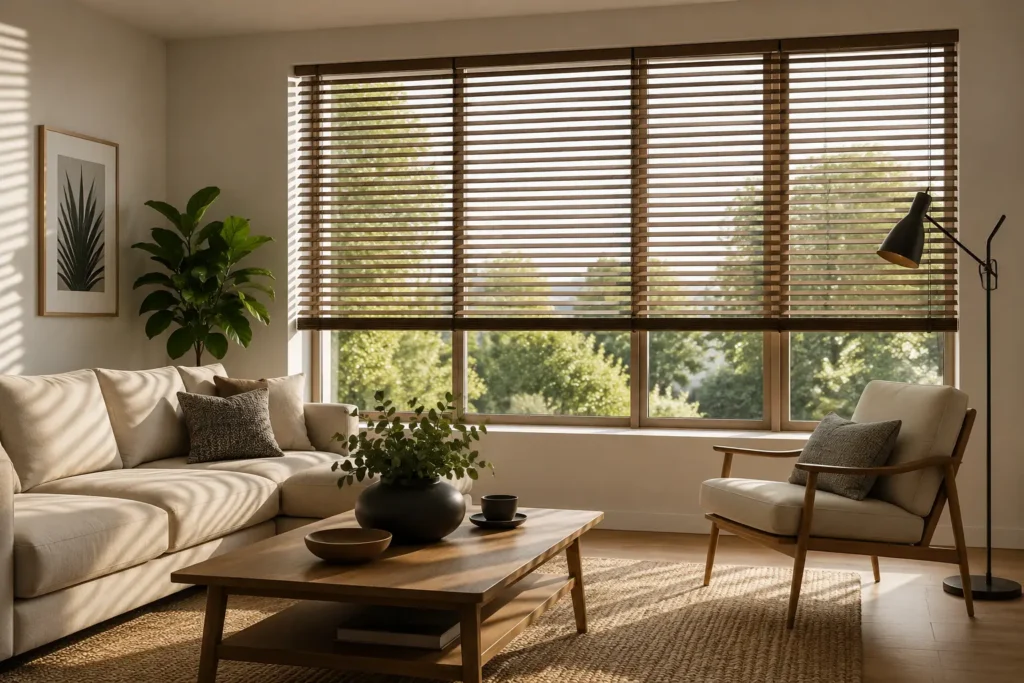
The best Venetian blind for your home is one that fits the room’s conditions, matches your lifestyle, and stays within your budget. Sounds obvious, but most buying mistakes happen when one of those three gets overlooked.
Here’s how to get all three right.
Match Your Blinds to Your Lifestyle
A material that works in a home office won’t always survive a house full of kids and pets, so you need to think about your routine before you buy. Below is a quick guide to help you find the right fit:
- Families With Young Children: Sticky fingers, toy impacts, and everyday play can quickly mark or damage Venetian blinds. Aluminium or PVC wipes clean in seconds, and neither shows damage the way timber would.
- Pet Owners: Once again, aluminium resists scratches, and the smooth slats don’t trap pet hair as soft furnishings do.
- Home Offices: Screen glare can make it difficult to work comfortably throughout the day. Timber and aluminium venetian blinds give you precise control over natural light. This way, you can adjust the slats as the sun moves and reduce glare without blocking the view completely.
- Premium Renovations: If you’re investing in a high-end fit-out, timber venetian blinds add the kind of warmth and character that lifts bedrooms, dining areas, and living rooms.
- Rental Properties: Keeping costs low without looking cheap is the goal here. PVC ticks both boxes and still looks tidy for inspections.
- Airbnb Accommodation: As you understand by now, aluminium and PVC barely need any attention and hold up well under frequent use. That makes them a practical choice for holiday rentals, where quick turnover between guests leaves little time for maintenance.
If you’re still not sure where to start, focus on the room you use the most. That’s where the right material will have a major impact on durability, maintenance, and everyday comfort.
Room-by-Room Material Recommendations
Every room deals with different levels of moisture, sunlight, and foot traffic. Because of that, the Venetian blind material that works in your living room might not hold up in your bathroom.
Here’s a room-by-room breakdown to make the decision easier.
Living Room
A living room is where most people spend their downtime, so the blinds need to look good and feel inviting. Timber venetian blinds do both well. The natural wood grain adds warmth, and the adjustable slats let you shift between soft natural light and full privacy as the day goes on.
Bedroom
Sleep quality depends a lot on how much light gets into the room. Wider 63 mm timber slats block more light than standard sizes, which makes them a solid pick for bedrooms. However, if you’re fitting out a kids’ room, aluminium holds up much better against daily wear and tear.
Bathroom
If there’s one room where moisture is unavoidable, it’s the bathroom. Luckily, PVC venetian blinds don’t absorb water, so regular condensation and humidity won’t cause them to swell or deteriorate. They also resist mildew, which makes them an easy, low-maintenance option for wet areas.
Kitchen
Kitchens generate a lot of steam, grease, and heat, especially around the stovetop. Aluminium venetian blinds handle all of that without warping or staining. A quick wipe with a damp cloth is all it takes to keep them looking fresh.
Laundry
Much like bathrooms, laundries deal with constant humidity from washing machines and dryers. PVC or aluminium venetians are the safest bet here, and both stay easy to clean regardless of how often you use the space.
Dining Room
Here, timber venetians pair nicely with most interior styles, including both modern and traditional. They also give you enough light control to set the right mood for a lazy Sunday brunch or a Friday night dinner.
Study
Screen glare is often an issue in home offices and study rooms. Both aluminium and timber offer precise control over how much natural light comes in. Your pick depends on whether you lean towards a warmer, classic look or prefer something more minimal and sleek.
The Best Venetian Blind Material Is the One That Fits Your Space
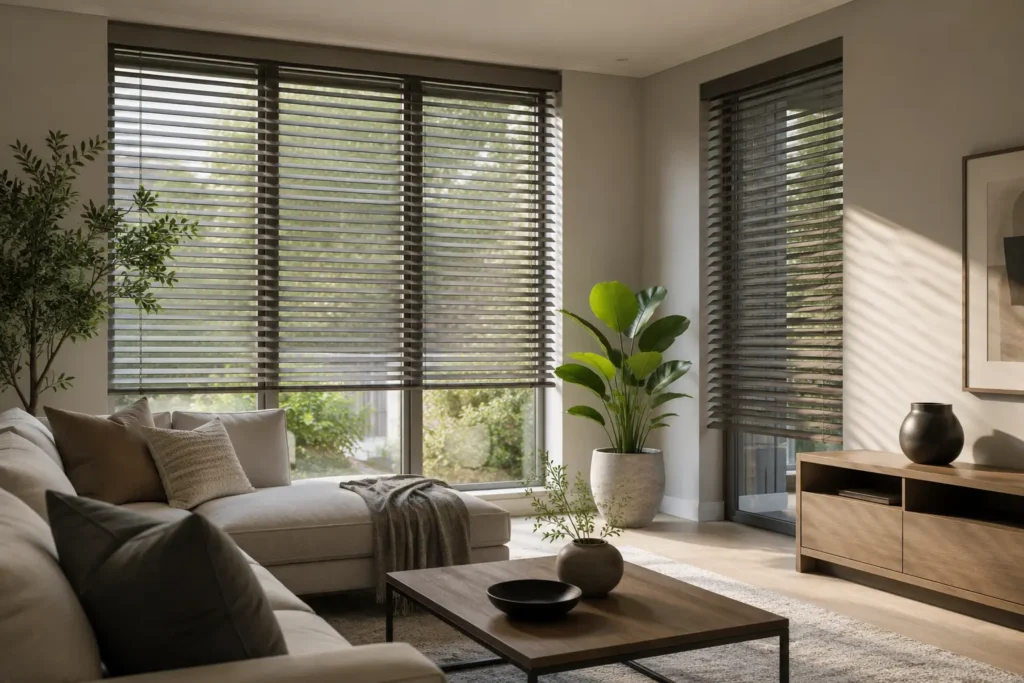
So, has this guide helped you narrow down the right Venetian blind material for your home? We hope so.
The truth is, every material works well when you match it to the right room. Timber Venetian blinds add warmth and a classic look to living areas and bedrooms. In kitchens and other high-use spaces, aluminium is often the better option since it’s durable and easy to clean
And bathrooms and laundries have different demands, where PVC stands out by resisting moisture while remaining an affordable choice.
Before you decide, think about:
- Your local climate
- How much upkeep are you comfortable with
- What your privacy needs look like long term
Getting the right Venetian blind materials now will save you from costly replacements later.
Want to find the right fit for your space? Check out the full range at Fleeting Youth Records and pick the option that works best for you.