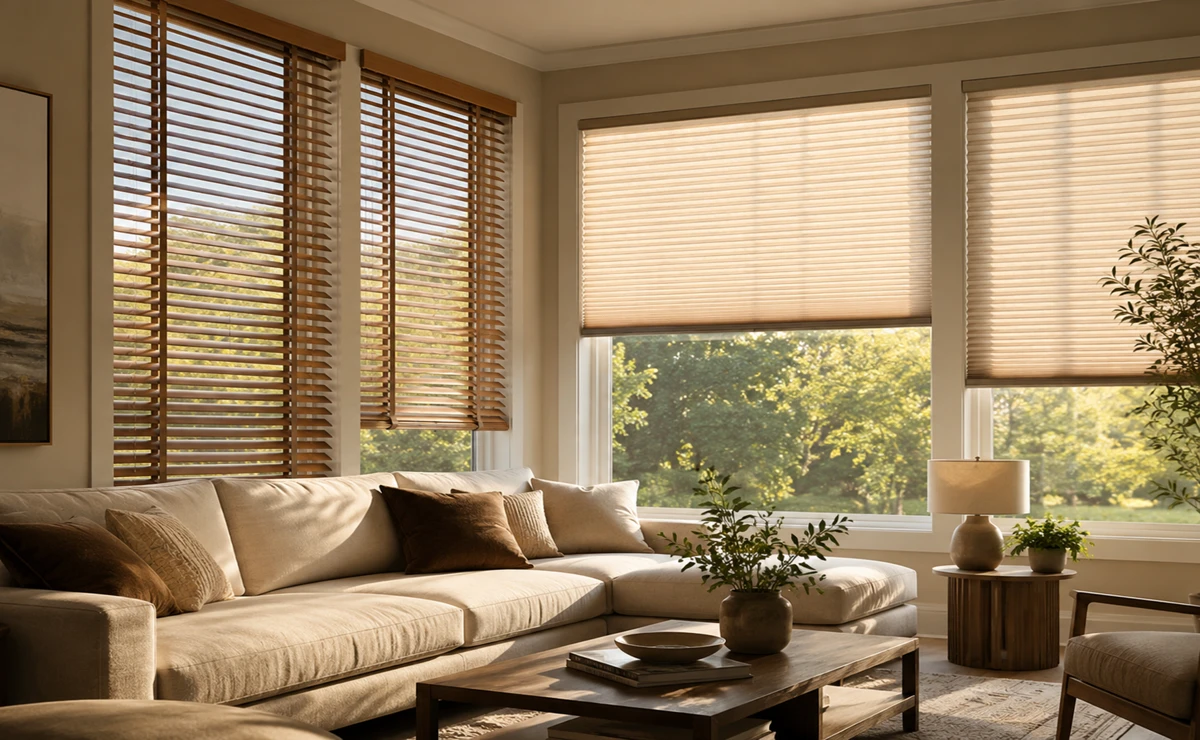
Window blinds give you good control over natural light. The right blinds can soften harsh glare in your living room, block out light in bedrooms, and keep prying eyes out of your space. And it all comes down to picking the right type for each room.
Look, we get it. With so many window coverings on the market, such as venetian blinds, light-filtering roller blinds, and motorised options, the whole thing can feel a bit much.
That’s why we put this guide together. We’ll walk you through how different blinds handle light, privacy, and comfort, so you can make a confident choice for your home.
Why Light Control Matters
Good light control shapes a room’s mood, energy, and function. It helps manage indoor temperatures, supports energy efficiency, and sets the mood for your whole living space.
Too much glare in home offices or living rooms makes it hard to focus on a screen or relax on the couch (and no, we’re not exaggerating). Even bedrooms suffer when morning light floods in way too early.
If you live in a west-facing house around Baulkham Hills or Penrith, you already know how punishing that afternoon sun gets. The right window treatments help you find a perfect balance between bright natural light and daytime privacy, without losing one for the other.
Venetian Blinds: The Classic Choice for Adjustable Light
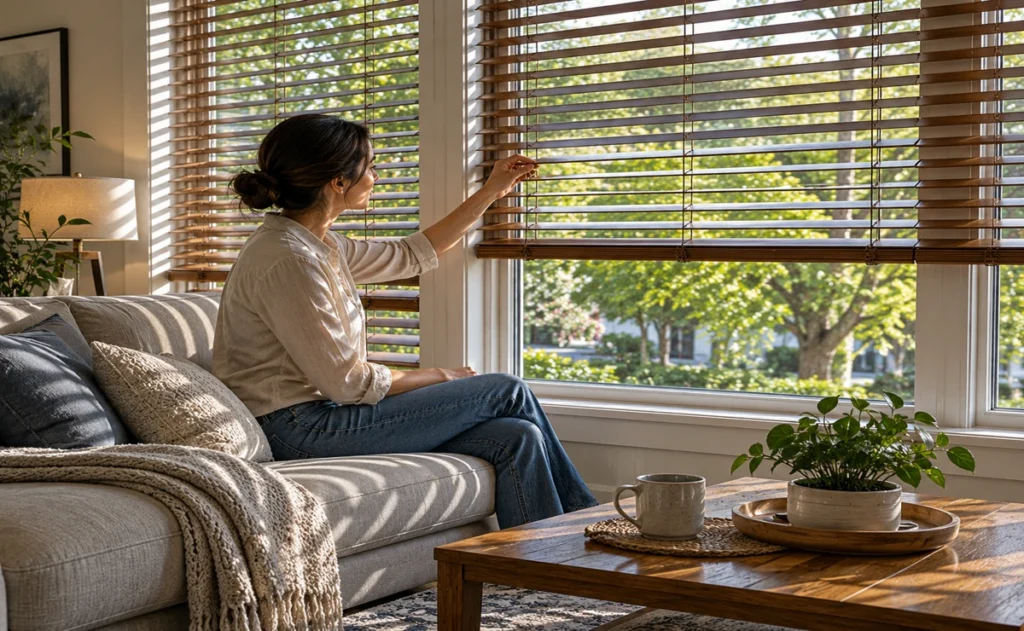
Venetian blinds give you hands-on control over how much natural light enters your room. A simple tilt of the slats lets you shift from full daylight to soft, filtered light in seconds.
Let’s see what makes Venetian blinds truly special.
How Venetian Blinds Work With Natural Light
The thing nobody tells you is that the slat angle changes light quality just as much as light levels. Tilting the slats upward bounces light off the ceiling, creating a softer glow across the room. Angling them downward pushes light toward the floor, which helps reduce glare on screens.
Typically, wood venetian blinds add a warm, natural feel and work well in dining rooms or living areas. Aluminium options give you a sleeker, more modern look with clean lines, and they handle moisture better in kitchens or bathrooms. Based on our firsthand experience, both colours and finishes hold up well with basic care.
In fact, Venetian blinds offer great light control for bedrooms, dining rooms, and home offices. That makes them one of the most flexible window coverings you can install.
Best Rooms for Venetian Blinds
Living areas and bedrooms benefit most from the adjustable angle of venetian slats. You can let in bright natural light during the day and dial it back for a cosy evening without closing the blinds completely.
East or west-facing dining rooms tend to cope with strong morning or afternoon glare. Venetian blinds let you adjust quickly, so you can enjoy your meal. Home offices also need soft, even daylight to cut down screen glare, and venetian blinds handle that job nicely.
Light Filtering Roller Blinds and What They Actually Do
Okay, so here’s the deal. A lot of people assume light filtering roller blinds block out light completely, but they actually do the opposite. For instance, roller blinds with light filtering fabrics use sunscreen fabrics to soften bright natural light without darkening the room. You still get a nice glow coming through, just without the harsh glare.
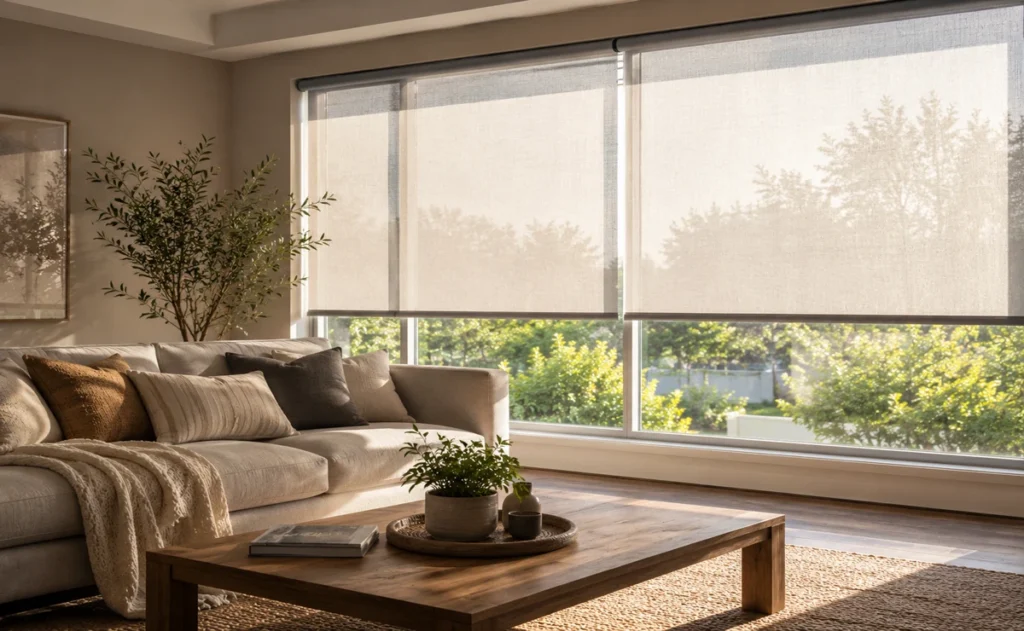
The way they work is pretty simple. The fabric lets a controlled amount of light pass through while maintaining privacy during the day. So your neighbours can’t see in, but you still enjoy soft, natural light filling your space.
So naturally, light-filtering roller blinds work best in living rooms, kitchens, and home offices where you want that airy, open feel. If you’ve got a bright north-facing window in a spot like Robina or Ryde, these roller blinds are a solid pick to keep the space comfortable without blocking the view.
Blockout vs Light Filtering Fabrics: Which One Suits Your Space?
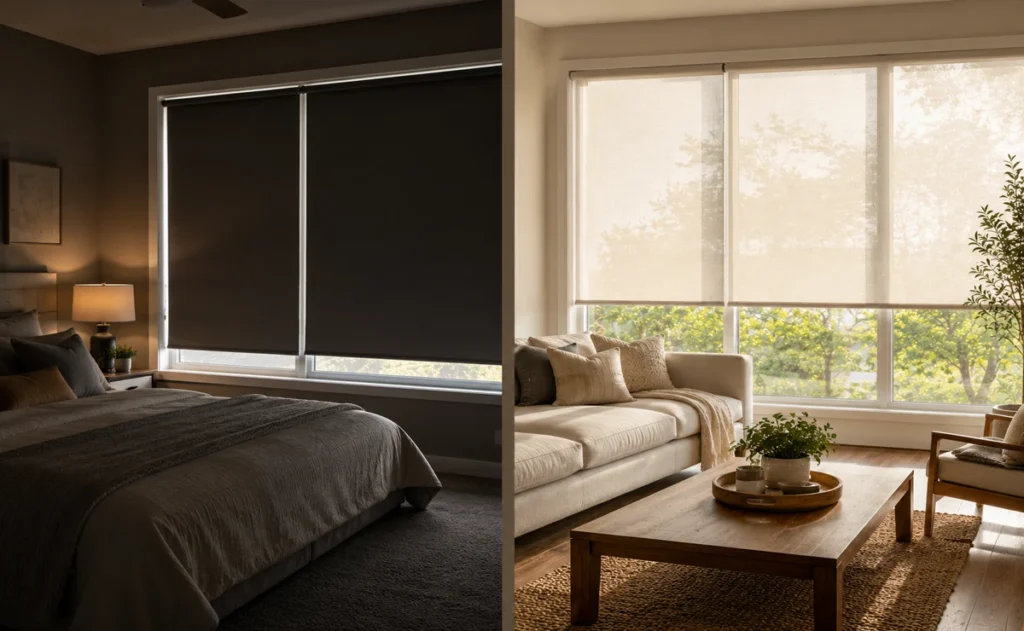
Knowing the difference between blockout and light filtering fabrics makes it much easier to pick the right choice for each room. Both fabric types control light, but they do it in very different ways.
Here’s how they compare.
- Blockout Fabrics for Full Darkness: Blockout fabrics stop almost all natural light from getting through. They create complete privacy and near-total darkness, which makes them ideal for bedrooms and media rooms. If you need solid nighttime privacy or you work night shifts and sleep during the day, blockout roller blinds are the go.
- Light Filtering Fabrics for a Softer Feel: Light filtering fabrics let a gentle, diffused glow into your room while still keeping prying eyes out (yeah, we didn’t believe it either). They suit dining rooms, living spaces, and anywhere you want soft daylight without the harshness of direct sun. The fabric quality varies, so always check the density before you buy.
- Choosing Between the Two Blinds: Your right choice depends on what each room needs. Bedrooms and media rooms do better with darkening fabrics for nighttime privacy. Living rooms and dining rooms lean toward light-filtering for daytime comfort. Some homeowners install two blinds on the same window, layering blockout behind light-filtering for full control.
A good rule of thumb is to walk through your house room by room and think about when you use each space the most. That tells you whether you need full darkness or just a bit of glare reduction.
Vertical Blinds and Other Window Treatments Worth Considering
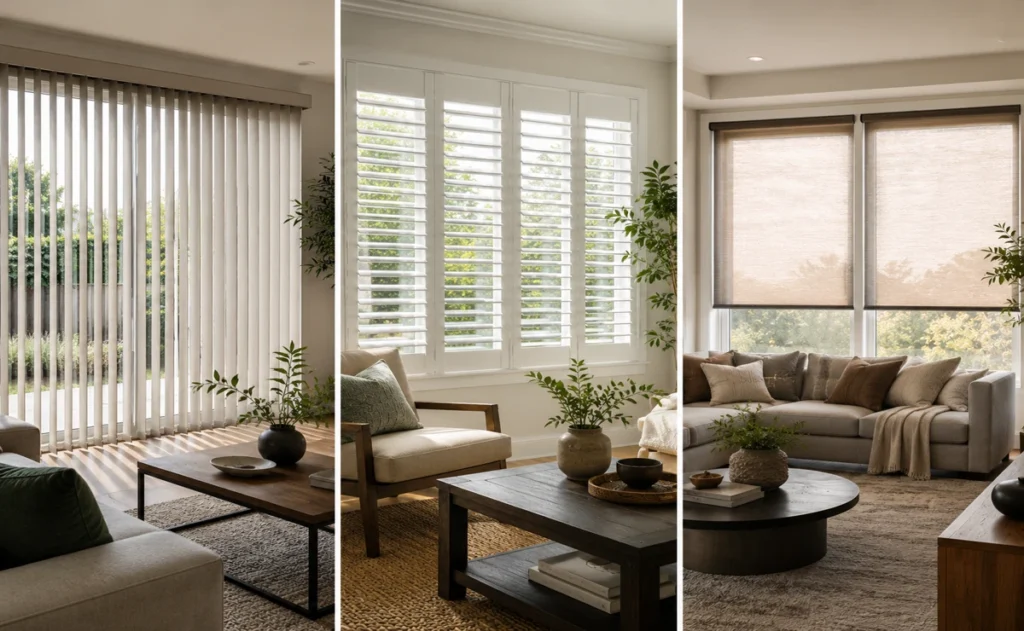
Now that you know how roller blinds and fabrics compare, a few other window treatments deserve a look.
Vertical blinds, plantation shutters, and contemporary shades each bring something different to the table.
Vertical Blinds for Wide Windows and Living Areas
Vertical blinds work best on standard windows and wide openings like sliding doors. The slats hang from the top and swing side to side, letting you adjust natural light from either direction.
Open-plan living areas around suburbs like Chermside or Joondalup often have large glass panels facing the street. Vertical blinds keep prying eyes out during the day while still letting soft light filter through.
Based on our practical knowledge, they hold up well in high-traffic spaces too. The slats are easy to wipe down and replace if one gets damaged. Vertical blinds offer a stylish, no-fuss option for anyone with big windows and flexible light control needs.
Plantation Shutters and Contemporary Shades
Plantation shutters give your room clean lines and a strong sense of interior design. The adjustable louvres let you control natural light with precision. To be honest, their solid build adds real aesthetic appeal to living areas and bedrooms.
Contemporary shades sit on the softer side of modern window coverings. They come in a range of colours and materials, creating a relaxed feel that suits dining rooms and living spaces.
Either way, other window treatments like Roman shades or panel glides give you plenty of room to match your home’s style. Ultimately, both options do a solid job of maintaining daytime privacy while keeping rooms bright and welcoming.
Getting the Right Fit: Measuring, Installation, and Window Frames
Getting your measurements wrong is the number one reason blinds don’t sit right on the window frame. A few minutes with a tape measure saves hours of frustration down the track.
Before you install your blinds, run through these essentials.
- Measure Each Window Separately: Not all windows in your house are the same size, even if they look identical. Measure the width and drop of each window frame individually. Our tests revealed that even a 5mm difference affects how roller blinds and venetian blinds sit once installed.
- Inside vs Outside Mount Installation: An inside mount fits your blinds neatly within the window frame for a clean, tailored look. Outside mount installation covers the full frame and blocks more light around the edges. Your pick depends on the style you want and how much light control you need.
- Professional vs DIY Installation: Fitting blinds yourself works fine for standard windows with straightforward frames. For trickier spots like bay windows or unusually shaped openings, professional installation gives you a better quality finish. Either way, double-check every measurement before you commit.
Taking the time to measure properly and choose the right installation method. Smart home integration and technology also take it a step further.
Ready to Let the Right Light In?
Sure, that sounds simple enough, but picking the right blinds takes a bit of thought. Every room in your house has different light, privacy, and style needs. What works in a bright living room won’t always suit a bedroom or home office.
The good news is you’ve got plenty of options. Venetian blinds, light-filtering roller blinds, vertical blinds, motorised blinds, and even plantation shutters all handle light control in their own way.
Start by measuring your windows and thinking about how you use each room. You can explore more guides and tips over at fleetingyouthrecords.com to help you make a creative and informed decision.