Independent artists in 2026 are breaking through by building direct relationships with fans and releasing music on their own terms. This is mostly because of social platforms that replaced the old gatekeepers. Musicians no longer need label support to reach listeners.
A big cultural shift is driving this movement. Today, Gen Z and Gen Alpha find new music through TikTok, YouTube, and niche playlists rather than radio charts. These younger listeners care more about authenticity than who signed an artist.
This is the reason for the DIY movement that’s causing more musicians to choose creative freedom over restrictive contracts. They would rather own their masters and build genuine fan communities than chase validation from record labels.
In this guide, we’ll walk you through the strategies for building a successful independent music career. You’ll learn about DIY releases, direct fan engagement, platform strategy, and realistic artist growth without a label.
First, we’ll look at how independent artists can promote their music successfully in 2026.
Effective Music Promotion Strategies for Independent Artists in 2026
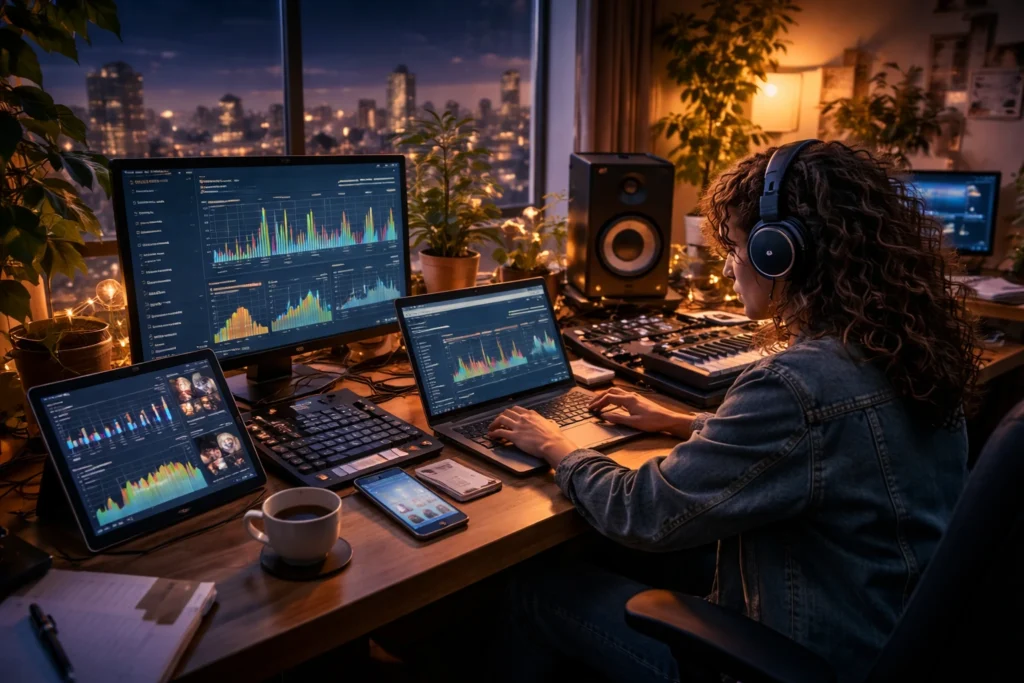
Music promotion for independent artists is most effective when you focus on the right platforms, spend wisely, and track what drives results. Don’t try to be everywhere at once; it will just burn you out.
In 2026, strategic, targeted efforts are the winner, so let’s explore the tactics that will generate noticeable results.
Making Your Music Stand Out on Every Platform
Each platform rewards different types of content, so your promotion strategy needs to match where you post. For example:
- TikTok: It favours short, catchy clips that grab attention in the first second. So you can share a 15-second snippet of your chorus, a funny behind-the-scenes moment, or a unique visual from your music video to reach more viewers quickly.
- YouTube: This is the best platform to post your music videos, behind-the-scenes footage, and even vlogs of your life outside of music. Remember, people want to get to know you first before getting invested in your music and story.
- Spotify: Now, let’s talk about getting your music in front of listeners. Spotify works differently because the algorithm favors consistency. This means if you release tracks regularly, you will increase your chances of landing on algorithmic playlists and reaching new fans.
- Instagram: You can use Stories, Reels, and DMs to connect with fans. We find the broadcast channel feature particularly useful for gathering feedback, sharing updates, and releasing news directly with your fans.
Just make sure to batch your content in advance and use scheduling tools like Later or Buffer. This will let you stay consistent on all platforms without feeling overwhelmed, and give you more time to focus on music and fans.
Focus Your Time and Money Where It Counts
Not every promotion method will give you a good return on investment, so be picky about where your dollars go.
Paid ads, in particular, will drain your budget fast if you target the wrong audience. We’ve found that investing in quality visuals and short video content delivers better results than this kind of blanket ad spending.
You can also pitch your music to Spotify playlists and curators through Spotify for Artists or by contacting them directly via email or social media. The reason this works so well is that playlist listeners are already in discovery mode and open to new artists. It’s better to start small this way, test what works, and then scale up from there.
Valuable Metrics: Track Your Growth
Numbers will show you what’s working and what isn’t. So focus on important metrics like save rates, monthly listener growth, and playlist adds, instead of vanity metrics like total plays.
Free tools such as Spotify for Artists and YouTube Studio will give you all the data on how your fans engage with your music. Use these tools to look closely at where your listeners come from and which songs keep their attention the longest.
You can then use this information to make better decisions about future releases and promotion strategies.
DIY Releases: How Indie Artists Are Owning Their Sound and Success
DIY releases give independent artists full control over their music, timelines, and profits. You decide when to drop a track, how to package it, and where the money goes. This freedom is why so many musicians are skipping labels altogether.
Here’s how to make DIY work for your artist growth.
Fewer Releases and More Impact
Flooding streaming platforms with new songs every week might sound productive, but it often backfires. This is because your listeners need time to connect with your music before you move on to the next thing. Too many releases can overwhelm them and reduce engagement.
A better approach is the micro-release strategy: instead of dropping everything at once, you space out singles, remixes, and acoustic versions over several months. So, you’ll basically create a release arc to keep fans engaged without overwhelming them.
Based on our observations, artists who plan releases around a central theme tend to build stronger emotional connections with their audience. When each song feels like a chapter in a bigger story you’re trying to convey, rather than a random drop.
Own Your Production and Distribution Pipeline
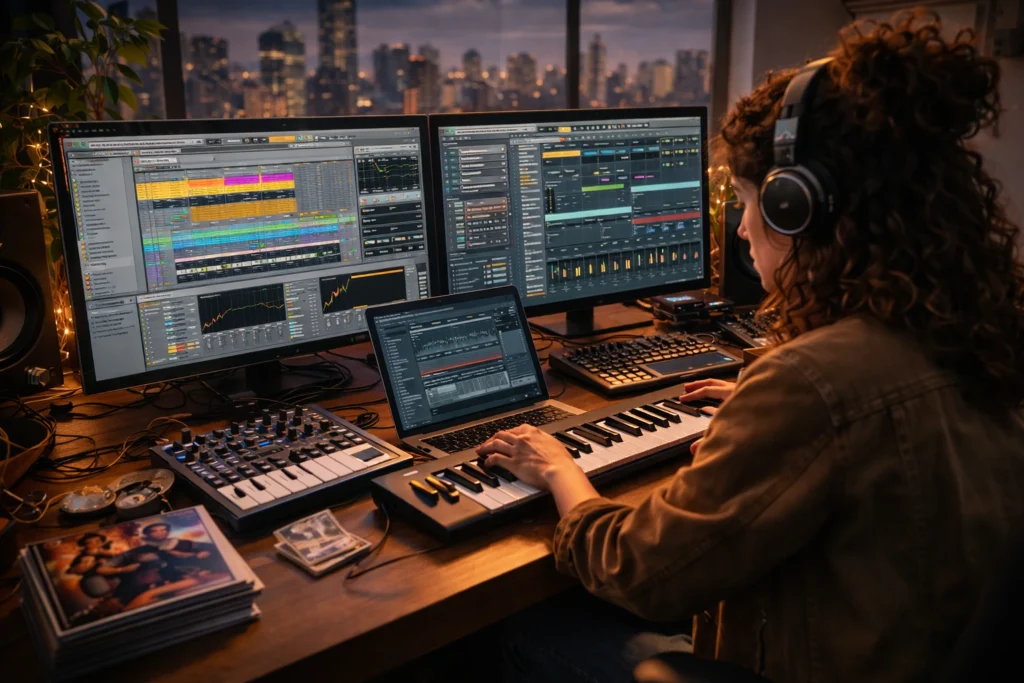
You no longer need a label to get your music on Spotify, Apple Music, or YouTube. Instead, you’ll have to use platforms like DistroKid and TuneCore to upload tracks directly and keep most of your royalties.
For production, affordable software like Ableton Live and FL Studio will put professional tools like multitrack recording, MIDI sequencing, and built-in effects in your hands.
But if mixing and mastering feel more overwhelming to you, AI services like LANDR can polish your final track for a fraction of studio costs. Bandcamp is another great option if you want to sell directly to fans and build a loyal community.
The more of this pipeline you control, the more money stays in your pocket.
Grow a Genre-Driven Community Around Your Sound
Do you know the best way to build a real audience for your music? It starts with finding your niche instead of chasing mainstream attention.
Take, for instance, fans of jazz, electronic, or alternative music. They often hang out in specific online spaces like Discord servers, Reddit communities, and genre-focused blogs. These spaces are full of people actively looking for new artists who fit their niche taste.
You can give them a go by sharing your music, commenting on others’ work, and starting conversations with like-minded people. Over time, these connections could turn many casual listeners into your dedicated supporters who stream your songs, share your posts, and show up for every release.
Grow Your Independent Music Career Without Overworking Yourself
So now you know, as an independent musician, your first step toward long-term growth is finding balance. You can’t create and promote at full speed forever, so learn when to take a break, automate repetitive tasks, or hand off things like video editing to someone else.
Having a support system will make the journey easier too. Facebook groups, Reddit communities, and local meetups are great places to find other indie artists who get what you’re going through. Mentors and collaborators can also open new doors and keep you motivated when things get tough.
Ready to take your music further? Visit Fleeting Youth Records to connect with a community that supports independent artists like you.